
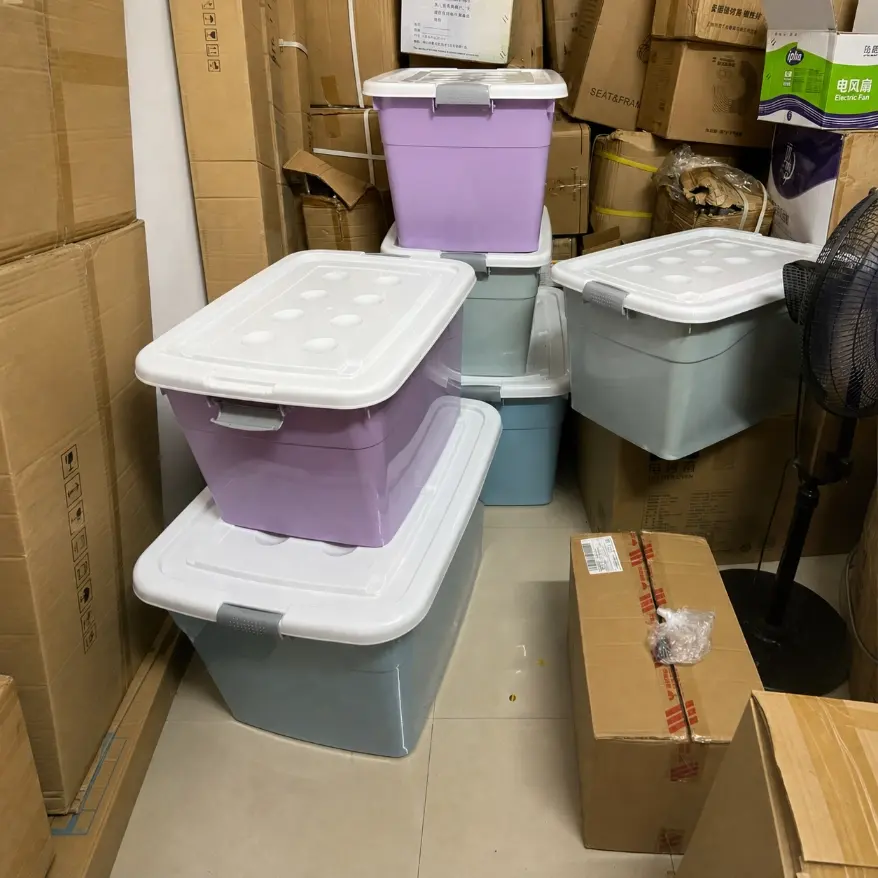
Project Overview
Client: Sofia, a Malaysian household goods wholesaler
Product categories: Plastic storage products, kitchen cleaning tools and bathroom essentials
Sourcing model: Multi-supplier procurement
Service scope: Product sourcing, manufacturer comparison, sample verification, order management, quality inspection, shipment consolidation and documentation
Key challenge: Fragmented suppliers, inconsistent quality and uncoordinated delivery schedules
Outcome: Successful completion of the first consolidated order and the establishment of a long-term sourcing partnership
Background
Sofia operates a local wholesale business in Malaysia, supplying practical household products to retailers and other commercial buyers.
Her purchasing list covered a broad range of everyday household goods, including:
Plastic storage and organization products;
Kitchen cleaning brushes and tools;
Household cleaning accessories;
Bathroom storage products;
Other practical bathroom essentials.
Unlike a single-product sourcing project, Sofia’s purchasing requirements involved many different product types, materials, sizes and functions.
No single factory could manufacture every item equally well. Plastic storage products, kitchen cleaning tools and bathroom accessories were often produced by different manufacturers, each with its own quotation format, minimum order quantity, production schedule, packaging method and communication process.
Before working with Hinsourcing, Sofia had to communicate with several suppliers separately. This created recurring procurement problems.
Some factories completed production earlier than others, while delayed products prevented the full shipment from being dispatched. Product quality also varied between suppliers, and inconsistent packaging increased the risk of damage during transportation.
The client was spending substantial time following quotations, confirming samples, checking production schedules and coordinating shipment information across different factories.
Sofia therefore needed more than a product-sourcing service. She needed a local partner in China capable of managing the entire multi-supplier procurement process as one coordinated order.
The Sourcing Challenge
Multi-category household goods sourcing involves several connected challenges.
Fragmented Manufacturing
Household products that appear together in a wholesale catalogue may come from completely different manufacturing supply chains.
A factory specializing in injection-molded plastic organizers may not produce cleaning brushes, bathroom racks or other household accessories. Attempting to purchase everything from one supplier may introduce an additional trading-company margin or reduce visibility into the actual manufacturers.
Hinsourcing therefore needed to identify suitable direct manufacturers for each product group while keeping the overall project under unified management.
Inconsistent Quotations
Different suppliers frequently quote products according to different assumptions.
A price difference may result from:
Different plastic materials or product weights;
Different dimensions or wall thicknesses;
Different accessories or component configurations;
Different packaging methods;
Different order quantities;
Different levels of workmanship;
Different domestic delivery or export charges.
Without aligning these details, the lowest quotation may not represent the best purchasing value.
Uncoordinated Production Schedules
Each manufacturer had its own production capacity and lead time.
If one factory finished on schedule while another was delayed, completed goods might need to remain in storage while waiting for the rest of the shipment. This could affect warehouse planning, container booking and the client’s expected delivery schedule.
Variable Quality
When multiple factories are involved, quality standards can become inconsistent.
One supplier may control appearance and packaging carefully, while another may accept scratches, deformation, loose components, weak handles or incomplete packaging.
The client needed a unified inspection approach across all participating suppliers.
Consolidation and Shipping Risk
Products from several factories had to be collected, checked and loaded into one consolidated shipment.
Carton dimensions, packaging strength, product shape and loading order all affected how efficiently the container could be used and how well the products would be protected during transportation.
Our Approach
Hinsourcing reviewed Sofia’s purchasing list and divided the products into logical sourcing groups.
Rather than sending the complete list to every supplier, we matched each product category with manufacturers whose production capabilities were relevant to that group.
The sourcing and evaluation process considered:
Product specialization;
Actual manufacturing capability;
Available designs and specifications;
Materials and workmanship;
Minimum order quantities;
Factory prices;
Sample availability;
Production capacity;
Lead times;
Packaging methods;
Quality-control practices;
Responsiveness and willingness to cooperate with consolidated shipping.
This approach allowed Hinsourcing to build a supplier combination around the client’s requirements instead of depending on one supplier to source unfamiliar products from other factories.
Product Selection for the Malaysian Market
Sofia was purchasing for wholesale distribution rather than for a single retail order. The selected products needed to offer practical functions, commercially suitable pricing and designs that could appeal to households in Malaysia and the wider Southeast Asian market.
Working with the client’s product positioning and target customers, Hinsourcing reviewed available styles and prioritized products suitable for everyday household use.
The product-selection process considered factors such as:
Practical size and storage capacity;
Ease of use and cleaning;
Product weight and durability;
Suitable colors and designs;
Efficient use of retail and shipping space;
Packaging appropriate for wholesale distribution;
Price points that supported the client’s resale model;
Availability for repeat purchasing.
For plastic storage products, the review focused on dimensions, structure, material appearance, lids, handles, stacking and general workmanship.
For kitchen cleaning tools, relevant points included handle strength, brush or cleaning-head construction, assembly, surface finish and functional use.
For bathroom products, the review considered moisture exposure, stability, drainage, surface finish and ease of cleaning, depending on the individual product.
The objective was not to make assumptions about all Southeast Asian consumers. Hinsourcing used Sofia’s local market knowledge and wholesale requirements to select products appropriate for her sales channels.
Manufacturer Sourcing and Price Comparison
Hinsourcing contacted multiple direct manufacturers capable of supplying the requested product categories.
To make the quotations more useful, we compared products according to aligned specifications instead of placing unrelated factory prices side by side.
The comparison considered:
Product model;
Dimensions and weight;
Material;
Color options;
Included components;
Unit price;
Minimum order quantity;
Packaging configuration;
Production lead time;
Domestic delivery arrangements;
Optional customization.
This helped identify quotations that appeared inexpensive because they were based on lighter materials, smaller sizes or less protective packaging.
It also allowed the client to understand where price differences came from and select products according to value rather than unit price alone.
Sample Verification
Before confirming the bulk orders, Hinsourcing coordinated and checked samples from the shortlisted suppliers.
Sample verification helped confirm whether the physical products matched the descriptions, photographs and quotations provided during the sourcing stage.
Depending on the product, the checks covered:
General appearance;
Product dimensions;
Material and weight;
Color and surface finish;
Assembly and component fit;
Opening, closing or locking functions;
Handles and connection points;
Sharp edges, flash or visible molding defects;
Stability and basic functional use;
Individual packaging;
Carton and labeling information.
The approved samples provided a clearer reference for production and later inspection.
A sample alone could not guarantee that every production unit would be identical, but it established a more objective basis for communicating the client’s expectations to each manufacturer.
Unified Order Management
After Sofia confirmed the selected products, Hinsourcing managed communication with the different factories through one coordinated workflow.
Instead of requiring the client to follow every supplier separately, we organized the key purchasing information and tracked each order according to its production status.
The order-management process included:
Confirming selected models and specifications;
Aligning quantities and factory prices;
Recording sample approvals;
Confirming packaging requirements;
Tracking production schedules;
Following up on supplier progress;
Coordinating changes or clarifications;
Monitoring expected completion dates;
Preparing the products for consolidated inspection and loading.
This gave Sofia one point of contact for the complete procurement project.
It also reduced the risk of important information being lost across separate conversations with multiple factories.
Unified Quality Inspection
Because the products came from different manufacturers, Hinsourcing coordinated a unified inspection process before consolidation and shipment.
The inspection focused on checking the goods against the confirmed order information and approved samples.
Depending on the product and order, the checks included:
Product model, color and quantity;
Dimensions and general appearance;
Assembly and basic function;
Visible scratches, stains or deformation;
Loose or missing components;
Sharp edges or molding defects;
Packaging completeness;
Carton condition;
Labels, carton marks and product identification.
Products with identified issues could be separated for clarification, correction or replacement before loading.
This was particularly important for a mixed household-goods shipment. Once products from multiple suppliers are loaded together and exported, identifying responsibility for shortages or damage becomes more difficult.
Shipment Consolidation and Container Loading
After production and inspection were completed, goods from the different factories were brought together for consolidated loading.
Hinsourcing coordinated the consolidation process so that the client did not need to manage separate shipments from every supplier.
The process included:
Confirming the completed quantity from each factory;
Coordinating delivery to the consolidation point;
Checking carton counts and shipment identification;
Reviewing packaging condition;
Organizing the mixed cargo;
Planning the loading sequence;
Checking the container condition;
Confirming the goods loaded;
Recording the loading and sealing information.
Consolidating the products into one shipment simplified the client’s logistics and reduced the complexity of receiving several independent consignments.
The loading process also considered product shape, carton strength and weight distribution. Heavier or more rigid cartons needed to be positioned carefully to reduce pressure on lighter plastic products and cleaning accessories.
This helped lower the risk of crushed cartons, product deformation and avoidable transportation damage.
Shipping Documentation
Hinsourcing also coordinated the documentation required for the consolidated shipment.
With goods originating from multiple factories, the information provided by each supplier needed to be collected and aligned.
The documentation process focused on ensuring consistency across:
Product descriptions;
Quantities;
Carton counts;
Gross and net weights;
Declared values;
Supplier and buyer information;
Country-of-origin information;
Shipment and container details;
Commercial and packing documents.
Accurate documentation was important because inconsistencies between the goods, packing information and shipping documents could create delays or questions during export and import procedures.
The applicable import, customs and product requirements remained subject to the product type and Malaysian regulations, but Hinsourcing helped organize and coordinate the supplier-side documentation.
Results
Hinsourcing connected Sofia with multiple direct manufacturers suitable for her different household product categories.
Plastic storage products, kitchen cleaning tools and bathroom essentials were sourced according to the client’s wholesale requirements.
Product options were selected with consideration for practical household use, commercial price points and suitability for the client’s Malaysian sales channels.
Quotations were compared according to product specifications, materials, packaging and order conditions rather than unit price alone.
Samples were checked before the bulk orders were confirmed, creating clearer references for production and inspection.
Hinsourcing managed production follow-up across multiple factories and provided the client with one coordinated point of contact.
Goods from the different suppliers were inspected, consolidated and loaded into one shipment.
Shipment documentation was collected and coordinated as part of the one-stop purchasing service.
The project reduced the time and effort Sofia spent communicating with separate suppliers and helped lower the risk of quality inconsistencies and transportation damage.
Following the successful completion of the first order, Sofia established a long-term sourcing partnership with Hinsourcing.
The Value of the Project
This case demonstrates that multi-supplier sourcing requires more than finding individual products at attractive prices.
When a purchasing list covers several categories, every additional factory creates another production schedule, quality standard, payment arrangement, packaging method and shipment handover to manage.
Without centralized coordination, the buyer may face:
Conflicting production schedules;
Repeated supplier communication;
Inconsistent product quality;
Incomplete shipment information;
Higher logistics complexity;
Poor container utilization;
Increased risk of damage or shortages.
Hinsourcing transformed Sofia’s fragmented purchasing process into one managed supply workflow.
The client still benefited from working with manufacturers specializing in different product categories, but she no longer needed to coordinate every factory independently.
Supplier sourcing, quotation comparison, sample verification, production follow-up, inspection, consolidation, loading and documentation were managed as connected parts of the same project.
This allowed Sofia to focus more of her time on wholesale sales and customer relationships in Malaysia while Hinsourcing handled the supplier-side coordination in China.
Product and Import Considerations
Requirements for household goods vary according to the product, material, intended use and sales market.
The buyer or importer should confirm the applicable Malaysian requirements for areas such as:
Material and chemical restrictions;
Food-contact requirements, where applicable;
Product and packaging labels;
Country-of-origin marking;
Packaging and plastic-bag warnings, where applicable;
Customs classification;
Import documentation;
Retail or marketplace requirements.
If a kitchen storage product is intended for direct food contact, its material and testing requirements should be evaluated separately. A general factory statement or certificate should not automatically be treated as proof that every product model complies with the destination market’s requirements.
Start Your Multi-Supplier Sourcing Project
If your purchasing list includes products from several Chinese manufacturers, Hinsourcing can help manage the project through one coordinated service.
Our support can include:
Direct manufacturer sourcing;
Product and quotation comparison;
Sample collection and verification;
Multi-supplier order management;
Production follow-up;
Unified quality inspection;
Warehouse consolidation;
Mixed-product container loading;
Shipping documentation coordination;
Communication with factories and logistics providers.
Send us your purchasing list, and Hinsourcing will help you organize multiple Chinese suppliers into one manageable sourcing and shipping process.