You can find plenty of hair care manufacturers in China. The harder part is deciding which ones to contact for your particular product.
A factory offering salon treatments may suit a professional hair brand. A company with ready-to-use shampoo formulas may be a better starting point for your first retail collection. Your order quantity, packaging, and target market can narrow that choice further.
I’d start with the comparison below, shortlist a few companies, and send them the same product brief. You’ll learn much more from comparable samples and quotations than from ten different sales presentations.
Hair Care Manufacturers in China: A Quick Comparison
Choose a manufacturer whose existing products match your planned range, then compare formula support, packaging, and minimum order quantities. Several companies below publish starting quantities; others quote by project. Confirm whether the minimum applies per product, formula, size, or packaging version before using it to plan your launch budget.
| Company | Main Products | Suitable Projects | MOQ & Conditions | What to Ask |
|---|---|---|---|---|
| Keronhair | Hair care, color, styling, professional treatments | Brands developing several hair product categories | Quoted by product and customization | Which formula route suits your brief? |
| LocRoyal | Shampoo, conditioner, masks, oils, styling | Coordinated hair care collections | Depends on formula, packaging, decoration, and SKU count | How do packaging choices affect the minimum? |
| TY Cosmetic | Hair care and other beauty products | Beauty brands adding a hair care range | From 2,000 pieces, depending on container capacity and packaging | Can it develop your specific hair product? |
| Xiran Skincare | Hair care, skin care, body care | Custom products across beauty categories | Advertises a general 1,000-unit starting minimum; confirm for your hair product | Does that minimum cover your formula and bottle? |
| Leezon Cosmetics | Salon care, styling, textured-hair products | Salon and styling brands | Custom private label typically around 5,000 units; conditions apply | What is the minimum for each styling product? |
| Yikangyuan | Botanical-positioned hair and personal care | Hair care collections with a botanical direction | Typically 1,000 units per SKU; confirm specifications | What evidence supports your planned ingredient claims? |
| KAIJOE | Hair care, color, perm, salon products | Professional hair product ranges | Project-specific quotation | Which development and testing steps are included? |
| Chinchy Cosmetics | Masks, treatments, shampoos, oils | Custom-label hair care and OEM/ODM projects | 500–1,000 pieces per SKU for custom labels or retail packaging; confirm scope | Is the offer distribution, relabeling, or custom development? |
| MACA | Shampoo, conditioner, masks, oils, leave-ins | Brands starting with established formulas | 3,000–5,000 units per SKU | Which changes are included in that quantity? |
| LAEYO Labs | Hair care, scalp care, leave-ins | Product development with packaging and documentation support | 1,000–3,000 units per SKU for startup projects using existing formulas and stock packaging | What changes would move the project into a larger order tier? |
Why I Chose These Hair Care Manufacturers in China
I chose this mix because brands need different kinds of manufacturing support. These are the capabilities worth comparing across the list:
- Different product specialties. You can compare everyday shampoo and conditioner suppliers with manufacturers offering salon treatments, color, or styling products.
- Options for broader beauty ranges. TY Cosmetic and Xiran also cover other cosmetics categories, which may help if your expansion plans go beyond hair care.
- Several formula development routes. Companies such as Keronhair and MACA describe existing-formula and customization options, giving you different starting points.
- Different order sizes. The published quantities give you a useful spread, from selected smaller custom-label projects to larger private label runs.
- Packaging support. Bottle selection, labels, artwork, and filling appear in several suppliers’ service offerings. These details often determine whether a launch stays within budget.
- Retail and salon applications. Leezon and KAIJOE bring professional product categories into the comparison, while other companies cover everyday retail routines.
- Development and production coordination. LocRoyal and LAEYO describe support across multiple project stages, useful when you’re managing formula and packaging decisions together.
- Different commercial starting points. Chinchy has its own hair care brands as well as OEM/ODM services. That lets you distinguish finished-brand distribution from developing your own label.
Once you’ve found a promising match, check the company behind the offer and the production site handling your order. Our supplier verification and factory audit service can help you assess the supplier before you commit.
10 Hair Care Manufacturers in China for Private Label and OEM/ODM Projects
1. Keronhair — Hair Care, Color, and Styling Product Development
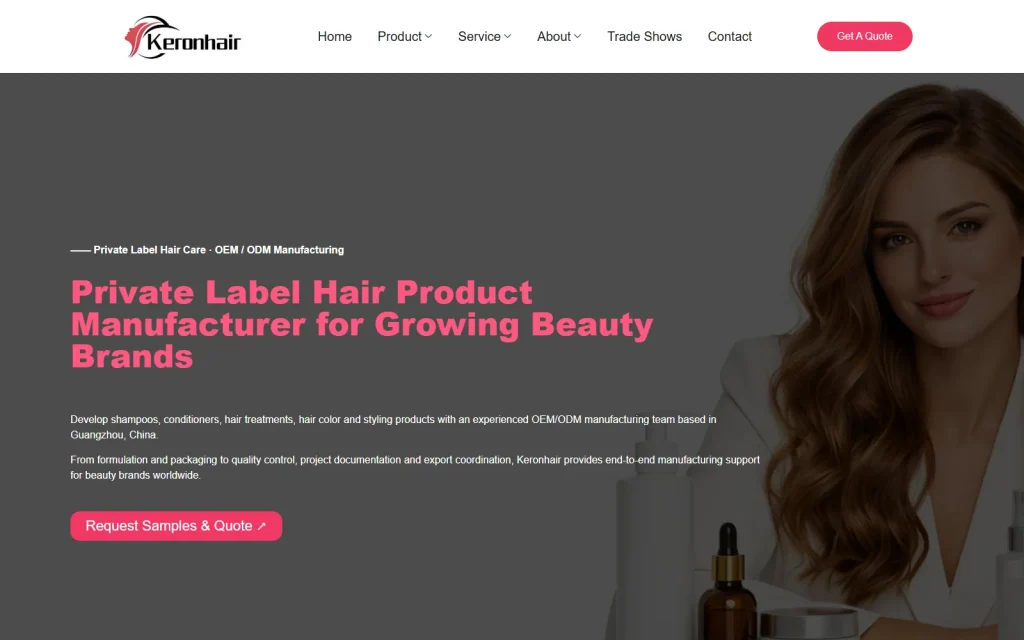
Website: keronhair.com
Established in 2010, Keronhair is based in Huadu, Guangzhou. Its range covers shampoos, conditioners, masks, oils, hair color, styling products, and professional treatments. That breadth makes it worth considering if you want to build more than a basic wash-and-condition range.
You can discuss established formulas, partial customization, or a new formula brief. I’d define your first product clearly before exploring the wider catalog: a retail conditioner and a professional straightening treatment need very different development discussions.
- Main Products: Shampoos, conditioners, hair masks, oils, color, styling products, and professional smoothing or straightening treatments.
- MOQ: Quoted according to the product, formula route, and packaging requirements.
- Services: Private label, OEM/ODM, formula development, customization, and packaging coordination.
- Ideal For: Brands planning a hair-focused collection with room to expand into styling or professional products.
Pros
- Covers several hair product categories within one supplier’s range.
- Offers different formula development starting points.
- Provides packaging support alongside product development.
Cons
- You’ll need a product-specific quotation to establish your minimum order.
- Professional treatments require their own usage instructions, testing, and market review.
2. LocRoyal — Hair Care Collections and Manufacturing Coordination
Website: locroyalhaircare.com
LocRoyal lists a Guangzhou office and a factory address in Foshan, Guangdong. Its product range includes shampoos, conditioners, masks, oils, serums, keratin treatments, and styling products. Its services cover formula choices, fragrance, texture, packaging, artwork, and manufacturing coordination.
If you’re developing a coordinated collection, ask how much can be shared across the range. A common bottle family or label format can simplify purchasing. LocRoyal’s MOQ depends on the formula, packaging, decoration, and number of SKUs, so those decisions belong in your first inquiry.
- Main Products: Shampoos, conditioners, masks, oils, serums, keratin treatments, and styling products.
- MOQ: Project-specific; affected by product, formula, packaging, decoration, and SKU count.
- Services: Formula customization, fragrance and texture adjustments, packaging, labels, artwork, and production coordination.
- Ideal For: Brands developing a coordinated hair care collection and seeking support across several project stages.
Pros
- Offers both everyday care and treatment categories.
- Connects product customization with packaging and artwork decisions.
- Explains several factors that influence the minimum order.
Cons
- No single published MOQ lets you calculate inventory before discussing specifications.
- Multiple formulas and packaging versions can make a small collection more complex to order.
3. TY Cosmetic — Hair Care Within a Broader Beauty Product Range
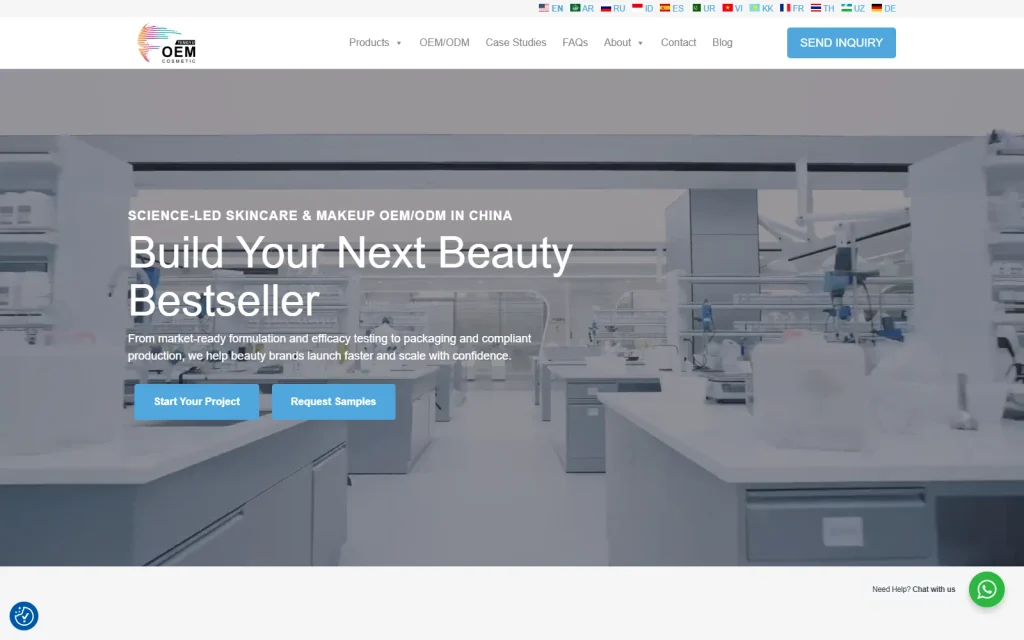
Website: tyoemcosmetic.com
TY Cosmetic was founded in Guangzhou in 2009. It manufactures across beauty categories, including shampoos, conditioners, masks, hair oils, and scalp products. You can also discuss skin care and other cosmetics if your brand plans to expand beyond hair.
For a hair care project, I’d ask for examples close to your intended product rather than assess the whole beauty catalog. Its FAQ gives a production minimum starting from 2,000 pieces, with container capacity and packaging affecting the order requirement.
- Main Products: Shampoos, conditioners, hair masks, oils, scalp care, and other beauty products.
- MOQ: From 2,000 pieces, depending on container capacity and packaging.
- Services: OEM/ODM, formulation, ingredient and fragrance customization, packaging, labels, and design options.
- Ideal For: Beauty brands adding hair care or planning products across several cosmetics categories.
Pros
- Covers hair care alongside other beauty categories.
- Offers formula and packaging customization.
- Publishes a starting production quantity for early budgeting.
Cons
- A 2,000-piece starting quantity may be too large for a very small pilot launch.
- You still need to assess hair-specific development support for your product brief.
4. Xiran Skincare — Custom Hair Care and Cosmetics Formulation
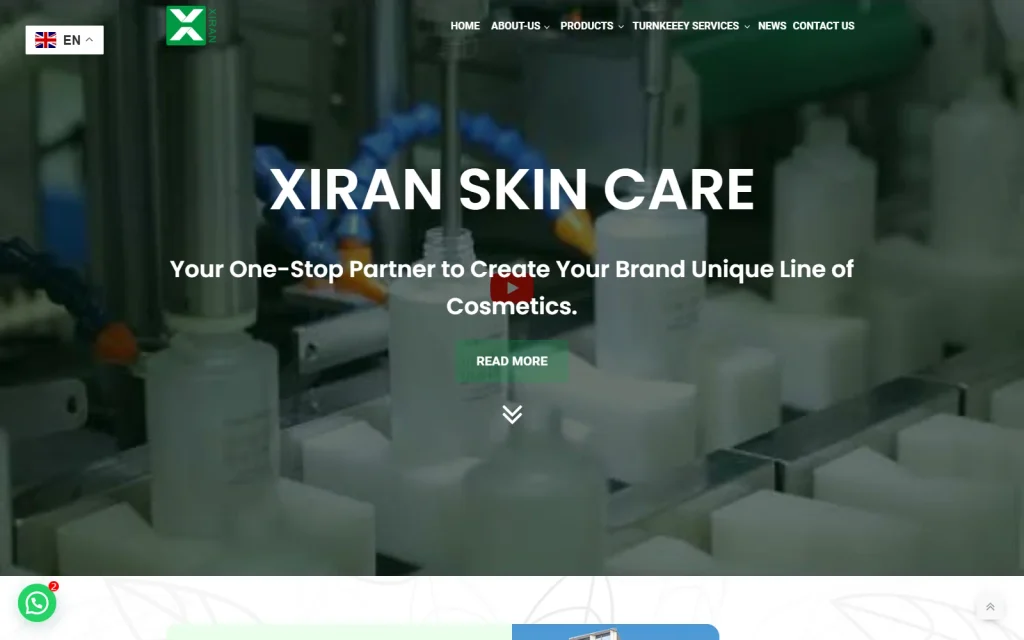
Website: xiranskincare.com
Founded in 2013, Xiran Skincare is based in Guangzhou. Despite its name, its catalog extends into hair care, body care, and other cosmetics. Its hair range includes shampoos, conditioners, masks, oils, serums, scalp products, and styling products.
Xiran describes formula development, packaging, production, and design support. It advertises a general starting minimum of 1,000 units. If that quantity fits your launch, ask whether it applies to your chosen hair formula and packaging before building the budget around it.
- Main Products: Shampoos, conditioners, masks, oils, serums, scalp products, and styling products.
- MOQ: Advertises a general minimum from 1,000 units; confirm the requirement for your hair product and packaging.
- Services: Custom formulation, packaging selection, design, production, and shipping support.
- Ideal For: Brands seeking custom hair care with the option to develop other beauty categories.
Pros
- Offers a broad hair care range within a larger cosmetics catalog.
- Connects formulation with packaging and design support.
- Publishes a starting quantity that may suit selected smaller projects.
Cons
- The general minimum isn’t a guarantee for every hair care formula or bottle.
- A broad product catalog makes category-specific samples and testing documents particularly useful.
5. Leezon Cosmetics — Salon Care and Styling Products
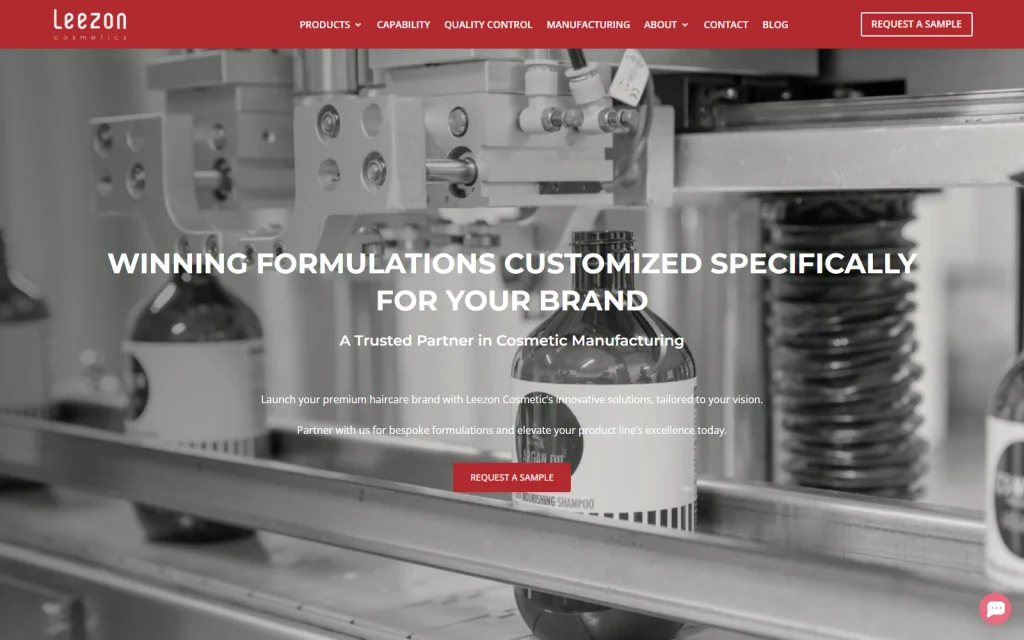
Website: leezoncosmetics.com
Leezon Cosmetics lists its headquarters in Huadu, Guangzhou. Its range combines care products with salon and styling categories, including pomades, waxes, gels, braid and loc styling products, and professional straightening products.
This makes Leezon an interesting candidate if your brief centers on hold, finish, texture, or salon use. Its private label page describes custom orders typically around 5,000 units. I’d settle the performance brief before choosing a jar or bottle, especially for products where a small change in texture can affect application.
- Main Products: Shampoos, conditioners, masks, oils, serums, pomades, waxes, gels, and professional styling products.
- MOQ: Custom private label typically around 5,000 units; confirm by formula and packaging.
- Services: Private label, OEM/ODM, customization, packaging, and brand presentation support.
- Ideal For: Salon brands, styling collections, and brands developing products for textured-hair routines.
Pros
- Includes styling categories beyond standard shampoo and conditioner.
- Offers braid and loc product options.
- Combines product customization with packaging services.
Cons
- The typical custom-order quantity creates a larger inventory commitment.
- Styling briefs need clear targets for hold, residue, finish, and washout.
6. Yikangyuan — Botanical Hair Care and Personal Care Development
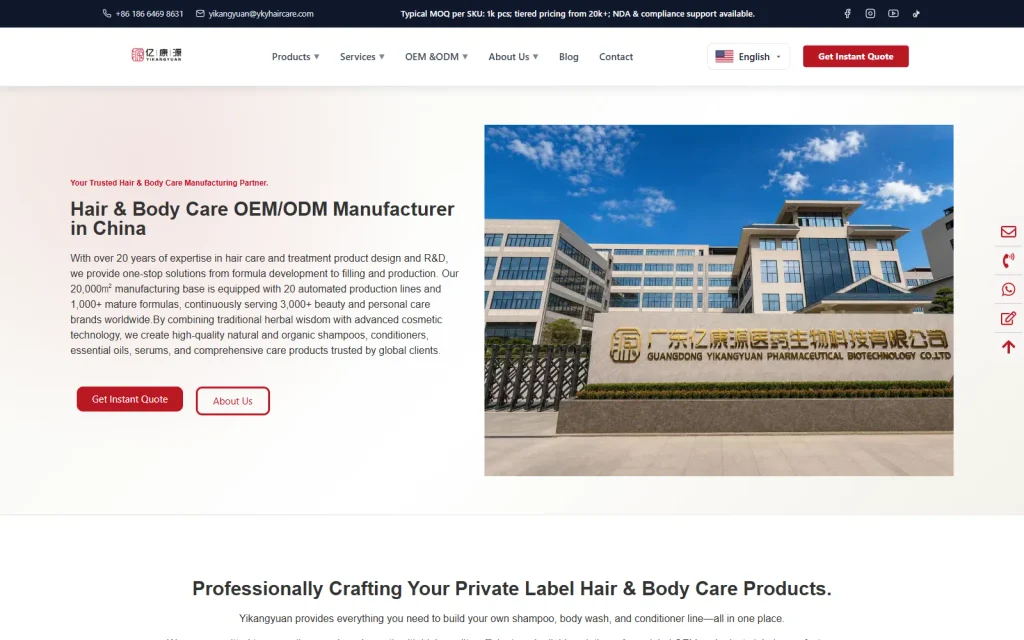
Website: ykyhaircare.com
Established in 2004, Yikangyuan is headquartered in Guangzhou. Its range includes shampoos, conditioners, masks, oils, scalp care, and personal care products, with a botanical direction featured in its product positioning.
If you want a botanical-led range, use ingredients as part of a clear product brief. Ask what each ingredient contributes, how it affects the formula, and what evidence supports your proposed label wording. Yikangyuan describes support with formula, fragrance, bottles, labels, production, and filling.
- Main Products: Shampoos, conditioners, masks, hair oils, scalp care, and personal care products.
- MOQ: Typically 1,000 units per SKU; confirm formula and packaging conditions.
- Services: Formula development, fragrance, bottle and label design, manufacturing, filling, and logistics support.
- Ideal For: Brands developing botanical-positioned hair care or related personal care collections.
Pros
- Covers several products you could combine into a hair care routine.
- Offers botanical product directions for further development.
- Supports packaging as well as formula choices.
Cons
- Botanical positioning still needs evidence for the claims you put on the label.
- Separate fragrances, sizes, and formulas can increase the total opening order.
7. KAIJOE — Professional Hair Care and Salon Product Manufacturing
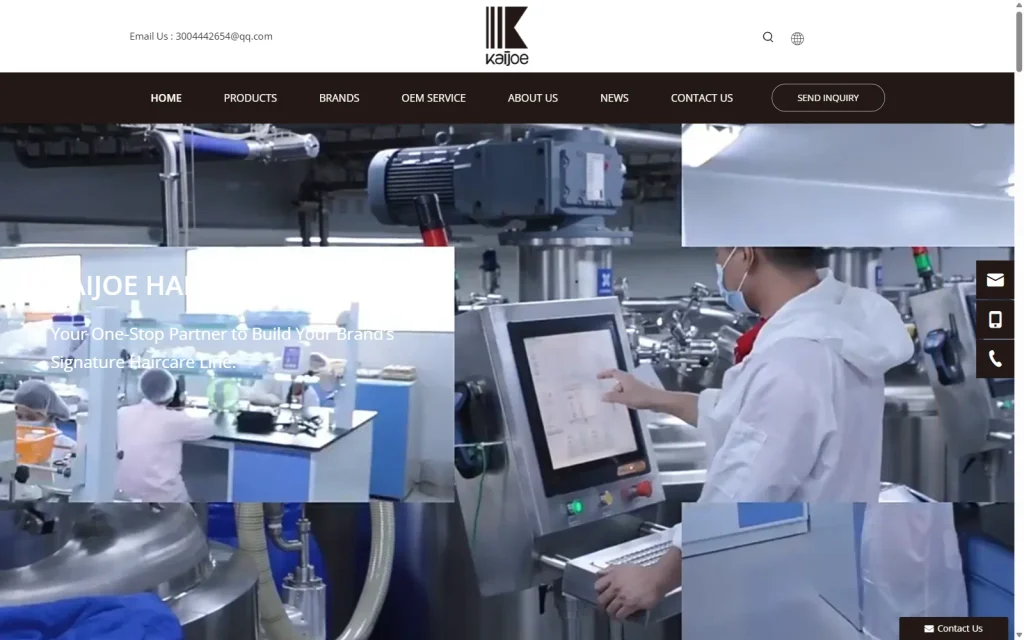
Website: kaijoehairbeauty.com
Established in 2002, KAIJOE is based in Zhaoqing, Guangdong. Its range spans hair care, hair color, perm products, and other salon categories. It offers OEM/ODM services for brands developing professional hair products.
I’d consider KAIJOE when your project needs a salon-focused product discussion. Explain who will use the product, how they’ll apply it, and where it will be sold. A professional treatment brief needs more detail than the product name and a reference photo.
- Main Products: Shampoos, conditioners, masks, hair care treatments, color, and perm products.
- MOQ: Obtain a quotation for your exact product and customization requirements.
- Services: OEM/ODM, product development, formula customization, and private brand manufacturing.
- Ideal For: Salon brands and businesses developing professional hair product ranges.
Pros
- Covers professional categories alongside daily care.
- Offers product development and contract manufacturing services.
- Provides scope to discuss related salon products with one supplier.
Cons
- Published quantities for individual products shouldn’t be treated as a company-wide minimum.
- Professional categories need detailed application guidance and target-market document review.
8. Chinchy Cosmetics — Hair Treatments and OEM/ODM Brand Projects
Website: chinchygroup.com
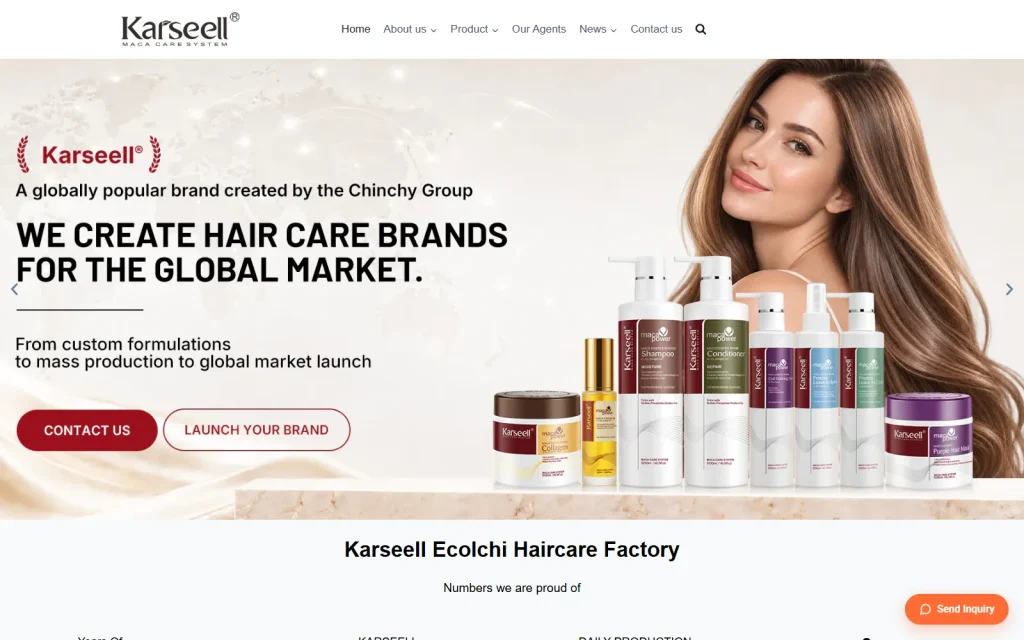
Chinchy Cosmetics was established in 2005 and is based in Guangzhou. It operates hair care brands, including Karseell, and offers OEM/ODM services. Its product range includes masks, treatments, shampoos, and oils.
Be clear about which business route you want. Buying an existing brand for resale and developing your own label involve different rights, packaging, and order conditions. For custom labels or retail packaging, Chinchy describes quantities of 500–1,000 pieces per SKU; confirm what formula and customization that offer covers.
- Main Products: Hair masks, treatments, shampoos, conditioners, oils, and related hair care products.
- MOQ: 500–1,000 pieces per SKU for custom-label or retail-packaging projects; confirm the final scope.
- Services: OEM/ODM, private label, packaging customization, and existing-brand distribution options.
- Ideal For: Brands exploring treatment-focused products or comparing custom-label development with branded distribution.
Pros
- Combines its own hair care brands with contract manufacturing services.
- Offers treatment categories that can anchor a care collection.
- Publishes smaller quantities for selected custom-label packaging projects.
Cons
- Distribution terms and private label terms need separate discussion.
- A custom-label minimum doesn’t establish the quantity for a newly developed formula.
9. MACA — Established Formulas and Private Label Hair Care
Website: macamask.com
Guangzhou Maca Cosmetics lists a Baiyun, Guangzhou address and offers shampoos, conditioners, masks, oils, leave-ins, and sprays. Its private label offering includes established formulas, packaging choices, and options for formula or fragrance customization.
MACA is worth considering if you’re comfortable starting with an existing formula and developing the presentation around it. Its published minimum is 3,000–5,000 units per SKU. At that scale, I’d limit the opening range to products you can support with a realistic sales plan.
- Main Products: Shampoos, conditioners, masks, oils, leave-in products, and sprays.
- MOQ: 3,000–5,000 units per SKU.
- Services: Private label, established formula selection, formula and fragrance customization, and packaging coordination.
- Ideal For: Brands ready for a larger opening order and interested in established hair care formulas.
Pros
- Offers established formulas as a development starting point.
- Covers complementary care products for a coordinated range.
- Supports fragrance and packaging choices.
Cons
- Several SKUs at the published minimum create a substantial inventory commitment.
- Extensive formula changes need a separate development and pricing discussion.
10. LAEYO Labs — Hair Care Development, Packaging, and Documentation
Website: laeyolabs.com
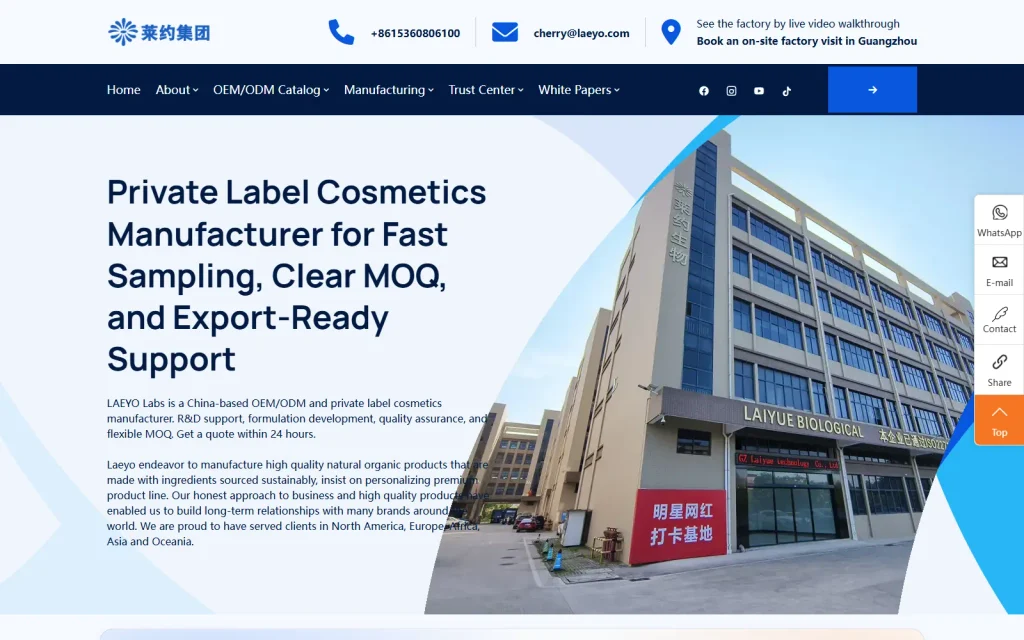
LAEYO Labs is based in Guangzhou and offers hair care development covering shampoos, conditioners, masks, oils, scalp serums, and leave-ins. Its service descriptions connect the product brief with formulation, filling, labeling, packaging, and quality documentation.
For startup projects using existing formulas and stock packaging, it publishes quantities of 1,000–3,000 units per SKU. That is a useful starting scenario to discuss. If you want a custom formula, unusual packaging, or extra documentation, ask how those requirements change the order size and schedule.
- Main Products: Shampoos, conditioners, masks, oils, scalp serums, and leave-in products.
- MOQ: 1,000–3,000 units per SKU for startup projects using existing formulas and stock packaging; other projects need separate confirmation.
- Services: Formula development, packaging, filling, labeling, quality control, and documentation support.
- Ideal For: Brands seeking coordinated development and a clearly defined startup production route.
Pros
- Describes support from the product brief through filling and labeling.
- Offers a defined starting route using existing formulas and stock packaging.
- Includes quality documentation in its project discussion.
Cons
- The startup quantity shouldn’t be assumed for extensive customization.
- Document support still needs to be matched to your product and destination market.
How to Plan Your First Hair Care Product Line with a Manufacturer in China
Define Your Customer and the Routine You Want to Build
Before asking for a catalog, describe who will buy your product and how they’ll use it. A salon professional, a customer with color-treated hair, and someone looking for a lightweight daily conditioner may need different formulas, instructions, and pack sizes.
I’d write a short brief covering your customer, the desired product experience, sales channel, destination country, and target retail price. Give the manufacturer a reference product if helpful, then explain what you’d change about it.
Choose Products That Work Together
A focused routine is easier to develop than a collection of unrelated products. Here are three possible starting directions:
| Brand Direction | Possible Starting Products | What to Align |
|---|---|---|
| Everyday retail care | Shampoo and conditioner | Fragrance, texture, bottle size, and usage instructions |
| Dry-hair care | Conditioner and weekly mask | Desired softness, rinse feel, and clear differences between the products |
| Styling routine | Leave-in product and styling cream | Application order, finish, hold, and whether the combination feels heavy |
These are planning examples. You’ll still need to assess the formulas and support any claims you make about them.
Control SKU Count and Packaging Complexity
Suppose you launch three products in two sizes. You’ve created six SKUs before adding fragrance variants. If each requires a separate minimum, your opening order can grow quickly.
Start with the fewest versions that make the collection useful. Ask whether products can share a bottle family, closure, or carton size. Different labels may still have separate printing minimums, but shared components can simplify purchasing and reorders.
If you need help turning that plan into comparable supplier inquiries, our China sourcing and procurement service can help coordinate the search and quotation process.
How to Choose a Hair Care Manufacturer in China for Your Brand
I’d start with two questions: can the factory make the product you want, and can you afford its minimum order? From there, compare the full project cost, development support, quality controls, and delivery plan. The points below will help you check the details before choosing a manufacturing partner.
MOQ: Separate Product Quantities from Packaging Minimums
Ask for the minimum by formula, fragrance, size, and packaging version. Also ask whether bottles, pumps, printed labels, and cartons have their own minimums.
For example, a factory might accept your filling quantity while a custom bottle supplier requires a larger purchase. Establish who owns and stores unused components, and whether you can use them in the next order.
Formulation Development and Manufacturing Experience
An existing formula may suit your brief with a fragrance or texture adjustment. A new formula requires a different development plan. Ask how many sample revisions are included, who handles the development, and what happens after you approve the sample.
I’d also ask for relevant product examples. Experience with shampoo doesn’t automatically answer questions about a styling wax or professional treatment.
Packaging Options and Formula Compatibility
Choose packaging that works with the product. A thick mask needs a suitable jar or dispensing system; an oil needs a closure that seals properly and allows controlled application.
Have the manufacturer assess the formula in the final packaging. Ask about leakage, dispensing, label adhesion, and compatibility testing. A sample in a laboratory pot won’t tell you how your retail pump performs.
Production Capacity and Delivery Schedules
Ask when the supplier can schedule your order, what materials must arrive first, and which approvals start the production clock. Separate formula sampling, artwork approval, packaging procurement, filling, inspection, and shipping.
A factory’s annual capacity tells you little about the slot available for your order. You need a project schedule with dependencies and agreed approval dates.
Pricing: Compare the Whole Project Cost
A useful quote separates formula and filling from bottles, closures, printing, cartons, development fees, testing, and transport. Ask what changes the price and whether the quote includes the packaging shown in the sample.
Compare quotations using the same quantity and specifications. A lower unit price may come with a larger order or simpler packaging. Work out your total cash commitment as well as the cost per unit.
Quality Control, Testing, and Batch Consistency
Agree on the approved formula, appearance, fragrance, fill quantity, packaging, and relevant quality specifications. Request the testing plan and records appropriate to your product, including stability, microbiological, and packaging compatibility work as applicable.
Keep an approved reference sample and agree how later batches will be checked against it. Our production follow-up and quality control service can help coordinate production checks and order inspection. Product safety and formulation testing require the appropriate specialist work too.
Ethical and Sustainability Practices
Ask for evidence behind the practices that matter to your brand: worker conditions, material traceability, waste handling, or recycled packaging content. If a supplier presents an audit, check its date, facility address, scope, and follow-up findings.
Avoid choosing packaging solely because it looks environmentally friendly. Ask what it’s made from and whether the components fit your customers’ local recycling arrangements. Keep your label claims specific to what you can substantiate.
Certificates and Documents for Your Target Market
Start with your destination market, then request the relevant factory and product documents. Check that company names, manufacturing sites, products, and dates match your project.
- Manufacturing practices: ISO 22716 provides cosmetics GMP guidance for production, control, storage, and shipment. It doesn’t establish approval of your finished product or prove environmental and worker-safety claims.
- United States: FDA facility registration and product listing should be discussed where applicable. Registration or listing doesn’t mean FDA approval, and FDA doesn’t issue certificates as proof of either process. See the FDA’s registration and listing guidance.
- European Union: The route to market includes a designated EU responsible person, a product safety report, and notification through CPNP. Plan these requirements with qualified support, using the European Commission’s cosmetics legislation guidance.
Ask who will supply each document, who will review it, and who is responsible for the final market requirements. Put those responsibilities in writing before production.
How to Compare Samples from Hair Care Manufacturers in China
Use the Same Brief and Comparison Conditions
Send your shortlisted suppliers the same written brief. Ask them to identify each sample, its formula version, and any differences from the requested specifications.
For user evaluation, follow the product instructions and record consistent conditions. Note hair characteristics, product amount, application method, and accompanying products. Changing several things at once makes feedback difficult to interpret.
Compare the Experience That Matters for Your Product
| Product | Useful Evaluation Points | Specific Feedback Example |
|---|---|---|
| Shampoo | Spread, lather, rinse feel, fragrance, and feel after drying | “The fragrance is stronger than our reference; please propose a lighter version.” |
| Conditioner or mask | Slip, spread, rinse time, and weight after drying | “This version feels heavy on fine hair; we’d like a lighter finish.” |
| Oil or leave-in | Dispensing, spread, residue, fragrance, and application amount | “The pump releases too much for one application; please suggest a lower-output option.” |
These checks help you choose the product experience. They don’t replace safety, stability, microbiological, or packaging compatibility testing. Avoid turning a few favorable comments into an unsupported performance claim.
Review Packaging and Give Specific Revision Feedback
Test the proposed bottle, pump, cap, or jar with the sample. Can you dispense the intended amount? Does the closure remain clean? Are the instructions readable?
Keep a revision log with the sample code, feedback, requested change, and next version. “More premium” gives a developer very little to work with. “Less fragrance, easier rinsing, and a smaller pump dose” gives them something concrete to address.
Where to Find Hair Care Manufacturers in China
Search Google and Manufacturer Websites
Search by product as well as manufacturing service: “private label hair mask manufacturer China” or “custom shampoo manufacturer Guangzhou,” for example.
Read the product, services, about, and contact pages together. You’re looking for a business whose product range and development process match your brief. Record the company name and production location for verification.
Compare Suppliers on B2B Platforms
B2B platforms can help you discover suppliers and send an initial inquiry. Use filters to narrow the range, then clarify who develops the formula, who fills the product, and which company will sign your order.
Ask about any differences between the listing and the quotation. A displayed quantity may apply to one stock product or packaging option.
Meet Manufacturers at Beauty Trade Shows
Trade shows let you see packaging, discuss a brief, and collect samples from several companies. Bring a short project sheet so each conversation covers the same requirements.
Afterward, request written specifications and a quotation from the relevant team. A good booth conversation is a starting point for supplier assessment.
Ask for Referrals and Relevant Product Examples
Packaging suppliers, industry contacts, and distributors may suggest manufacturers worth investigating. Ask why the company suits your product category and order size.
Request examples the manufacturer is authorized to share. A recognizable customer logo alone doesn’t explain its role in developing or producing that customer’s products.
Work with a China Sourcing Partner
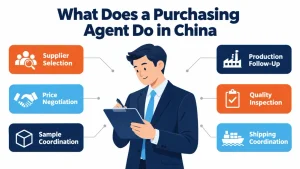
A sourcing partner can help find candidates, compare quotations, verify suppliers, and coordinate order follow-up. Clarify which tasks are included and how fees work.
For hair care, also identify who handles technical formulation review and market requirements. Those responsibilities need named specialists rather than assumptions about the sourcing service.
How to Start Working with a Hair Care Manufacturer in China
I’d move from shortlist to production in five steps:
- Prepare one brief. Include your customer, product, quantity, target market, formula direction, packaging, and budget.
- Request comparable quotations. Ask suppliers to identify exclusions and separate development, production, packaging, and testing costs.
- Review samples and agree revisions. Keep version records and approve the formula and final packaging together.
- Confirm the written order terms. Set specifications, document responsibilities, payment milestones, inspection arrangements, formula rights, and the production schedule.
- Approve shipment after agreed checks. Coordinate inspection, packing details, transport, and import paperwork. Our shipping and customs coordination service can help organize that stage.
Here’s a simple inquiry framework you can send to each supplier:
| Information | What to Include |
|---|---|
| Product | Product type, intended user, and desired application experience |
| Quantity | Opening quantity per SKU and possible reorder quantities |
| Formula | Existing formula, modifications, or a new development brief |
| Packaging | Size, bottle or jar, closure, label, carton, and reference images |
| Market | Destination country and sales channel |
| Budget | Target manufacturing cost and the items it should include |
| Schedule | Desired launch date and your approval availability |
| Documents | Required tests, records, and market documentation responsibilities |
FAQs About Hair Care Manufacturers in China
What Is the MOQ for Private Label Hair Care Products in China?
It depends on the supplier, formula, and packaging. This list includes selected custom-label quantities of 500–1,000 pieces, startup scenarios of 1,000–3,000 units, and larger private label quantities around 5,000 units. Ask for the minimum per SKU, plus separate packaging minimums.
How Much Does It Cost to Manufacture a Hair Care Product in China?
You’ll need a product-specific quotation. Formula, ingredients, fill size, order quantity, packaging, decoration, and testing affect the cost. Send the same specifications to several suppliers and compare total project costs, including development fees and transport, alongside the unit price.
Can Chinese Hair Care Manufacturers Develop Custom Formulas?
Several manufacturers on this list offer custom formulation. Confirm whether the service means modifying an existing base or developing a new formula from your brief. Ask about sample revisions, development fees, testing, ownership, and whether the formula will be exclusive to your brand.
Can I Start a Hair Care Brand with a Small Order?
Yes, selected suppliers offer smaller starting quantities under defined conditions. Your options may be wider if you use existing formulas, stock packaging, and fewer SKUs. Ask which changes fit the quoted minimum before committing to custom bottles or multiple fragrances.
How Long Does Private Label Hair Care Manufacturing Take?
The schedule depends on development, approvals, packaging availability, production booking, testing, and shipping. LAEYO describes a 4–8-week startup scenario using existing formulas and stock packaging; ask what that period includes. Obtain a written schedule for your project, especially if you need new formulas or custom packaging.
What Documents Should I Request from a Hair Care Manufacturer?
Request the company’s business details, manufacturing-site information, relevant quality documents, product specifications, ingredient information, applicable test reports, and batch records or certificates of analysis as agreed. Your destination market determines the additional documentation. Check that each document covers the actual site, formula, or batch you’re buying.
Who Owns a Custom Hair Care Formula?
Ownership depends on the written agreement. Paying for development doesn’t settle every right automatically. Define formula ownership, exclusivity, access to technical information, permitted use, and whether you can transfer production. Resolve these points before commissioning development rather than after the product succeeds.
Find the Right Hair Care Manufacturer in China for Your Brand
Your next step is to narrow this list to manufacturers whose products and order conditions fit your launch. Send them the same brief, compare samples, and work through the packaging and documentation before placing an order.
If you’d like help with the supplier search and purchasing coordination, contact Hinsourcing with your product types, quantities, destination market, formula needs, packaging ideas, budget, and timeline. We’ll review the project and discuss the sourcing support it needs.