If you’re learning how to find a purchasing agent in China, collecting names is the easy part. The harder part is finding someone who understands your product, explains their fees, and can support your project. This guide gives you ten checks before you hire.
Choose by fit, not by the lowest product price or service fee. A cheap product may use different materials, and a cheap agent may hide markups. An independent agent can suit a focused project, while a sourcing company may offer broader capacity and backup.

What Does a Purchasing Agent in China Do?
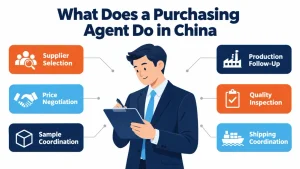
What an agent handles depends on the agreed scope. The most common request I receive is simple: a client sends me a product list, and I screen suppliers and return a final quotation sheet within the target price range.
That is purchasing-agent work in its simplest form. More complex projects may include supplier sourcing, quotation comparisons, sample coordination, production follow-up, inspection arrangements, consolidation, and shipment preparation. Ask each candidate to mark every task as included, optional, excluded, or outsourced.
Purchasing Agent vs. Sourcing Agent, Trading Company, and Freight Forwarder
Several types of service providers can help you buy from China, but their interests and responsibilities differ. Choose the service type according to the work you need, then confirm who works for you, who sells the goods, and who manages supplier relationships.
| Service type | Main responsibility | Usually suitable when | What to verify |
|---|---|---|---|
| Purchasing or sourcing agent | Finds, evaluates, and coordinates suppliers for the buyer | You need custom products, several factories, or local support | Service scope, fees, and disclosure responsibilities |
| Trading company | Sells or consolidates products as the contractual seller | You prefer dealing with one commercial entity | Whether the manufacturer and product markup are disclosed |
| Freight forwarder | Arranges freight and handles related shipping documents | Purchasing is complete and the goods require transportation | Any purchasing or inspection responsibility |
| Buying or parcel-forwarding agent | Purchases listed products and forwards small parcels | You are buying standard products from online platforms | Limits on supplier development and production follow-up |
Do You Need a Purchasing Agent in China?
Whether you need an agent depends on the product and your team’s management capacity. If you’re developing custom products, unfamiliar with Chinese factories, or coordinating specifications, schedules, packaging, and consolidation across suppliers, local support can reduce uncertainty.
A purchasing agent can also handle routine follow-up when your team lacks time or language support. That leaves you with more time to focus on marketing and other parts of the business.
I once worked with a South African entrepreneur who sold bicycles. Early on, he spent a lot of time screening suppliers and even traveled to China to buy in person. After we started working together, he could focus on his brand, and sales gradually began to pick up.
If most of the following situations describe your project, working with a purchasing agent may save your team considerable time:
- Limited time for supplier screening or factory visits in China.
- Little experience evaluating and comparing Chinese suppliers.
- Multiple suppliers to coordinate across production, delivery, and order consolidation.
- Insufficient in-house time or language support for daily follow-up.
- Support needed with inspections, shipping, or production issues.
If you’re still deciding whether China suits your product and sourcing goals, first read why businesses source products from China.
Where Can You Find a Purchasing Agent in China?
Client referrals, search results, and industry events can help you build a candidate list, but none proves reliability. Verify each candidate’s identity or legal entity, business setup, fee structure, and working process before moving forward.
Client Referrals and Industry Contacts
A referral is useful only when you understand the project behind it. Ask what the agent sourced, which tasks they handled, how long the relationship lasted, and how problems were resolved before deciding whether that experience resembles your project.
Google, LinkedIn, and Professional Websites
Check whether the website, business email, professional profiles, contact details, and identity information in supplied documents are consistent. You can also search the brand, legal company name, and principal contacts alongside terms such as “complaint,” “dispute,” or “scam.”
Trade Shows, Wholesale Markets, and Service Provider Referrals
Trade shows and wholesale markets let you meet agents directly and observe how they discuss products and factories. Logistics or inspection providers may also recommend contacts, but any introduction remains only a potential lead until you complete your own checks.
Can You Find a China Purchasing Agent on Alibaba or 1688?
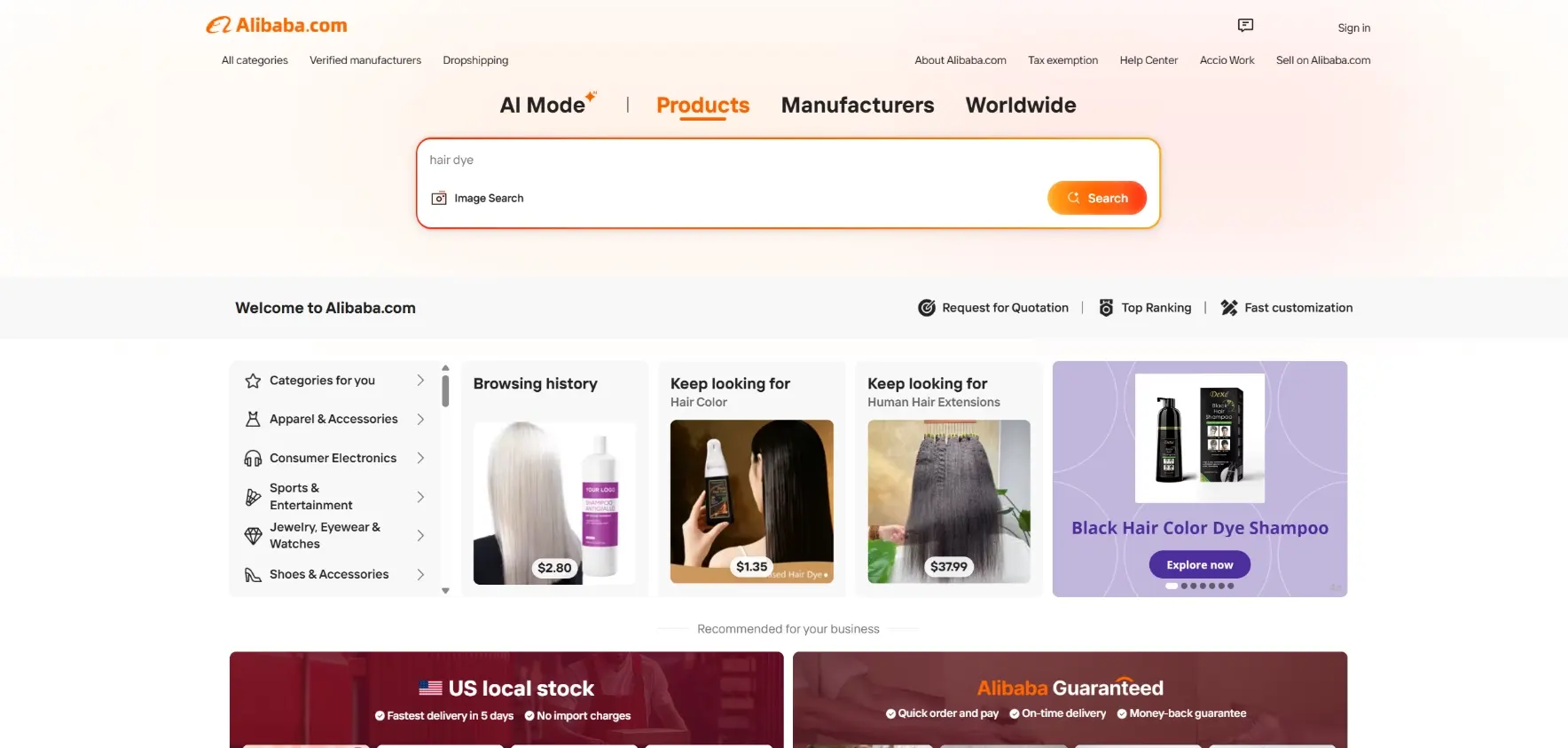
Alibaba.com and 1688 can help you find suppliers, but a platform storefront doesn’t automatically create an independent buyer-side relationship. Alibaba Group describes Alibaba.com as a global B2B e-commerce platform and 1688 as a domestic wholesale marketplace in China.
Alibaba.com’s Verified Supplier program uses independent third-party assessments. Its official disclaimer says Alibaba doesn’t independently verify or guarantee the authenticity of sellers’ products or certificates, or the accuracy or timeliness of assessment information.
Treat the badge as preliminary evidence, not a quality guarantee. Confirm which party the contact represents, how the company earns money, and whether it will disclose supplier information.
Platform profiles can support your research, but they can’t replace company verification, like-for-like quotation comparisons, sample approval, and a paid trial project.
How to Vet a Purchasing Agent in China: 10 Checks Before Hiring
Once you understand the fee models, the next step isn’t simply comparing prices. You need to verify who each candidate is, how they work, how they’re paid, and what records they can provide when supplier problems arise.
| Check | What to confirm | Useful evidence |
|---|---|---|
| 1 | Sourcing requirements and service scope | Written responsibilities and deliverables |
| 2 | Agent type and product-category experience | Relevant anonymized project records |
| 3 | Business identity, working setup, and capacity | Registration or identity records and live verification |
| 4 | Supplier search and verification process | Supplier shortlist and screening criteria |
| 5 | Comparable supplier quotations | Comparison based on identical specifications |
| 6 | Fees and conflicts of interest | Itemized costs and written disclosures |
| 7 | Samples and change management | Approved specifications and version records |
| 8 | Production and quality processes | Timelines, checklists, and reports |
| 9 | Payments, shipping, and project handover | Entity consistency and responsibility matrix |
| 10 | Performance during a paid trial | Actual deliverables from a small project |
1. Confirm the Agent Understands Your Requirements and Service Scope
Send every candidate the same sourcing brief. A professional agent should identify missing information before recommending suppliers. The written scope should also state who handles supplier searches, samples, order follow-up, inspections, warehousing, deliverables, and approval for extra work.
- Evidence to request: Written responsibilities, milestones, deliverables, excluded services, and approval rules.
- Warning sign: Broad promises without defined boundaries, outputs, or responsibilities for the buyer.
2. Verify the Agent Type and Product-Category Experience
First, establish whether the candidate is an individual purchasing agent, sourcing company, trading company, or another procurement service provider. Instead of relying on client logos, ask product-specific questions about materials, manufacturing processes, quality risks, and supplier selection.
- Evidence to request: Anonymized project records, inspection checklists, issue reports, or authorized client references.
- Warning sign: Claims of expertise in every category without asking product-specific questions.
3. Verify the Business License or Identity, Office, and Actual Capacity
First confirm whether you’re hiring an individual or a company. Then verify the identity or legal entity, working location, people involved, current capacity, backup arrangements, and payment recipient. The evidence should match how the candidate presents the business.
How to Verify a Chinese Business License
If the candidate presents itself as a company, ask for the full legal Chinese company name and Unified Social Credit Code, then search the National Enterprise Credit Information Publicity System. Compare the registered name with the proposal, contract, invoice, and intended payment account.
Company registration can confirm that a legal entity exists and show its public records. It doesn’t demonstrate category experience, commercial integrity, financial stability, or the ability to manage sourcing well.
If you’re hiring an individual, confirm the person’s legal identity, contracting name, usual working location, payment recipient, current workload, and any subcontractors or backup support.
How to Confirm the Office and Purchasing Team
For a company, arrange a live office tour or visit when practical and meet the people responsible for sourcing, follow-up, quality, and logistics. For an individual, confirm current workload, outside support, and who provides cover if the agent becomes unavailable.
- Evidence to request: Registration or verified identity, work-location evidence, roles or subcontractors, backup arrangements, and matching payment information.
- Warning sign: The claimed company, office, or team cannot be substantiated, or the contracting and payment identities don’t match.
4. Review How the Agent Finds and Verifies Suppliers
Ask where the agent finds factories and how each supplier is screened. Business registration, factory audits, sample evaluations, laboratory testing, and compliance assessments answer different questions; none can replace all the others.
- Evidence to request: Supplier shortlist, screening criteria, registration records, audit findings, and unresolved questions.
- Warning sign: Only one supplier, with no alternative, verification evidence, or selection rationale.
Review Hinsourcing’s supplier verification and factory audit service, then use the written proposal to confirm which checks apply to your project.
5. Compare Quotations Using Identical Product Specifications
Ask every supplier to quote against identical specifications, quantities, packaging, and trade terms. The lowest price may reflect thinner materials, simpler construction, excluded work, or a misunderstanding of your requirements. The agent should identify these differences.
How to Compare Chinese Supplier Quotations
Review each quotation line by line. Ask the agent to flag specification differences, excluded costs, sample variations, delivery assumptions, and the specific reasons for recommending one supplier over another.
- Evidence to request: A like-for-like comparison showing specifications, differences, exclusions, and recommendation reasons.
- Warning sign: The lowest price is emphasized without explaining product differences or omitted costs.
6. Check Supplier Disclosure, Conflicts of Interest, and All Fees
Ask the agent to state in writing whether factory details and original supplier quotations will be disclosed, and whether income comes from product markups, supplier commissions, or referral fees. A low service fee matters only when later pricing and payment flows remain clear.
How to Check Purchasing Agent Fees and Markups
Ask for separate lines covering products, services, samples, domestic transport, inspections, warehousing, consolidation, and other possible charges. Also confirm how cost changes require approval and whether supplier-paid income could influence recommendations.
- Evidence to request: Itemized quotations, fee schedules, conflict disclosures, and cost-change rules.
- Warning sign: New charges keep appearing while markups or commissions remain unexplained.
7. Examine Samples, Specifications, and Change Management
Keep the approved sample version, product specifications, packaging requirements, and change history together. Written terms should also cover confidentiality, use of designs, ownership of tooling or samples, project files, and which changes require your approval.
- Evidence to request: Approved specifications, sample revision records, document versions, and change authorizations.
- Warning sign: Approvals are scattered across chats, or materials change without consent.
8. Define Production Follow-Up, Inspection, and Problem Handling
Agree in advance on production-update frequency, key milestones, inspection timing, acceptance criteria, shipment-release conditions, and escalation steps. Before production begins, define responsibility for rework, shortages, delays, failed inspections, and reinspection costs.
- Evidence to request: Production timeline, inspection checklist, reports, escalation process, and responsibility matrix.
- Warning sign: Zero-defect promises without a defined inspection scope or problem-handling process.
Inspection doesn’t replace laboratory testing, certification-document review, or compliance work for your target market. Each has a different purpose and should be arranged separately according to the product and destination market.
Review Hinsourcing’s production follow-up and quality control service, then confirm the inspection method, reporting responsibilities, and third-party roles for your order.

9. Clarify Payment, Shipping, and Project Handover Responsibilities
Confirm who receives each payment, when deposits and balances are due, who arranges transport, and which documents authorize shipment release. The agreement should also explain how unfinished orders, supplier contacts, claims records, samples, and project files are handed over if cooperation ends.
- Evidence to request: Contracts, invoices, payment milestones, transport responsibilities, release documents, and handover terms.
- Warning sign: Pressure to pay an unrelated personal account or authorize shipment before the goods are inspected.
10. Compare Actual Performance Through a Paid Trial
Before committing a large order, ask shortlisted agents to complete the same small paid task, such as comparing three suppliers or coordinating one sample round. Assess their research, quotations, communication, document control, risk awareness, and timing.
How to Test a Purchasing Agent in China Before Hiring
Give each candidate the same task brief, deadline, delivery requirements, and evaluation criteria. The assignment should reveal how they work while keeping your cost and order exposure within a reasonable range.
- Evidence to request: Trial documents, communications, supplier rationale, risk notes, and project review.
- Warning sign: Refusal to complete any test while immediately requesting a substantial payment.
After the trial, record only the evidence you received. The simple table below helps you compare candidates without turning subjective impressions into scores that look more exact than they are.
| Evaluation area | Evidence received | Pass | Needs confirmation | Stop |
|---|---|---|---|---|
| Identity or legal entity, working setup, and capacity | ||||
| Category experience and supplier research | ||||
| Quotations, fees, and conflict disclosures | ||||
| Samples, documentation, and quality processes | ||||
| Trial delivery and problem handling |
Review Hinsourcing’s sourcing and procurement service, then ask exactly which activities are included in the final written proposal for your project.
Should You Choose an Individual Purchasing Agent or a Sourcing Company?
I once worked as an independent purchasing agent, so I know a capable individual can deliver good work. My professional knowledge and sincere approach earned positive feedback from most clients. The decision should come down to relevant experience, capacity, transparency, and backup arrangements.
| Comparison factor | Individual purchasing agent | Sourcing company |
|---|---|---|
| Communication | Usually handled by one contact | May involve people in several roles |
| Service coverage | Depends on proven experience, availability, and support network | Depends on its processes, team structure, and current project load |
| Continuity | Confirm what happens if the agent becomes unavailable | Confirm who provides backup for each role |
| Project capacity | May suit projects with a narrow task range | May coordinate more suppliers and tasks simultaneously |
| Accountable party | Verify the individual’s identity and payment recipient | Verify the legal entity and actual project team |
Both models can work. An individual often offers direct communication and category knowledge, while a company may provide wider role coverage and backup. Compare the people, capacity, fee disclosure, and work evidence instead of treating either label as proof.
What Should You Prepare Before Contacting a Purchasing Agent in China?
The value of an agent’s response depends heavily on how clearly you explain your requirements. A consistent sourcing brief helps candidates ask more relevant questions and makes their supplier recommendations and quotations easier to compare.
- Product photos, drawings, physical samples, or reference links showing the intended design.
- Required materials, dimensions, functions, tolerances, colors, finishes, and acceptable alternatives.
- Expected sample quantities and order volumes for each product or individual SKU.
- Destination market, packaging, labeling, intended use, and any known compliance concerns.
- Expected production schedule, delivery location, Incoterms, and final delivery constraints.
- Tasks the agent must manage, support, coordinate, document, or explicitly exclude.
- Purchasing priorities such as quality, lead time, customization, or target landed cost.
Mark any unresolved testing, certification, or market-access requirements as matters requiring confirmation. The agent will then know to request relevant documents or seek specialist advice instead of making assumptions.
Send the same brief to every candidate. If you change materials, quantities, packaging, or delivery terms between enquiries, the resulting quotations will no longer be comparable on the same basis.
How Much Does a Purchasing Agent in China Charge?
There is no single pricing model for purchasing agents. Common options include fixed service fees, percentage-based fees, project fees, monthly retainers, hybrid arrangements, product markups, and commissions paid by suppliers.
When comparing costs, include items that may be charged separately, such as samples, domestic transport, inspections, storage, consolidation, and shipping coordination. Comparing headline service fees means little until you understand exactly what each fee covers.
Fixed Service Fee
A fixed fee is usually easier to manage when the work is clearly defined, such as supplier research or one round of sample coordination. Confirm how many suppliers, revisions, and deliverables it covers, and how additional work will be approved.
Percentage of Order Value
With a percentage-based fee, the agent’s earnings change with the order value. Confirm which amount forms the calculation, whether a minimum applies, and how discounts, cancellations, refunds, or order changes affect the final fee.
Project-Based Fee
A project fee combines several related tasks into one charge, running from an agreed starting point to a defined outcome. Record the project milestones, deliverables, completion criteria, and early termination conditions in writing.
Monthly Retainer or Hybrid Fee
A monthly retainer may suit ongoing purchasing that requires consistent local support. Hybrid pricing adds order-based or task-based charges, so confirm the included work, reporting frequency, review dates, additional fees, and cancellation terms.
Product Markup or Supplier Commission
Some purchasing agents earn money through product markups or supplier commissions. Ask to see original supplier quotations and have product costs separated from the agent’s service income, so you understand clearly how the agent is compensated.
Frequently Asked Questions
Are a Purchasing Agent and a Sourcing Agent the Same?
Often, yes. Companies commonly use both terms for supplier searches, quotation comparisons, sample coordination, and order follow-up. The label alone says little, so compare each candidate’s scope, fee model, responsibilities, and supporting evidence.
How Do You Verify a Purchasing Agent in China?
If the candidate is a company, match its legal name across registration, contract, invoice, and payment account. For an individual, verify identity, contracting name, payment recipient, capacity, and backup arrangements. In either case, review work evidence and begin with a paid trial.
Can a Purchasing Agent Work With Suppliers I Have Already Found?
Yes. You can engage an agent for supplier verification, negotiation, sample coordination, production follow-up, inspection arrangements, or shipment preparation. Before work begins, define who owns the supplier relationship, what information may be disclosed, and how project records will be handed over.
Can a Purchasing Agent Guarantee Product Quality?
A responsible agent won’t promise zero defects in every unit. An agent can organize specifications, follow production, coordinate inspections, and report problems, but testing requirements, acceptance criteria, rework responsibilities, and target-market requirements must still be defined in advance.
Is It Worth Hiring a Purchasing Agent for a Small Order?
Possibly. Order value is only one consideration. An agent may still provide practical value when the product requires customization, quality risks are difficult to assess remotely, several suppliers are involved, or your team lacks time to manage sourcing directly.
Choose a Purchasing Agent Whose Process Can Be Verified
Don’t focus only on the lowest service fee or the boldest promise. Prioritize a clear business identity, quotations that can be clearly explained, relevant working documents, defined responsibilities, and a willingness to prove the process through a small paid trial.
Start with a clear product brief, then let the evidence guide your decision. To discuss whether this sourcing model suits your project, send your specifications, expected quantity, target market, and current challenges to Hinsourcing.