Buy directly when you know the supplier, understand the product, and can manage follow-up. Use a China purchasing agent when supplier selection or local coordination exceeds your team’s capacity. If you only need help with certain tasks, keep the factory relationship and arrange specific support.
China Purchasing Agent:
- Local support for supplier screening and factory visits.
- Less daily follow-up for your own team.
- Easier coordination across suppliers, samples, inspections, and shipping.
- More time to focus on sales and business growth.
Buying Direct from China:
- Direct communication with the manufacturer about product requirements.
- No separate agent fee when you manage purchasing yourself.
- Greater control over negotiations and supplier relationships.
- Firsthand supplier knowledge to support future orders.

A factory quote arrives, and the price looks promising. Then come the sample questions, packaging changes, and production updates. You could handle them yourself, but how much time will the order take? And would paying an agent genuinely make it easier?
The China purchasing agent vs. buying direct decision becomes clearer when you compare the work behind each quote. This guide examines both options, their costs, and the decisions you still need to make, with a remote-buying example from Hinsourcing.
China Purchasing Agent vs. Buying Direct: A Quick Comparison
The table below compares who organizes the work. Actual arrangements depend on the supplier’s offer and the agent’s agreed scope, so use it to identify questions for your own order rather than assume every provider works the same way.
Purchasing task | Buying direct from a manufacturer | Using a purchasing agent |
Supplier search and screening | Your team finds candidates and arranges the checks it needs. | The agent searches and screens candidates within the agreed brief. |
Quotes and samples | You clarify specifications, compare offers, and follow sample requests. | The agent collects information and coordinates samples for your approval. |
Production and changes | You follow milestones and resolve questions with the factory. | The agent follows agreed milestones and brings decisions back to you. |
Quality checks | You arrange factory checks, independent inspections, or your own visits. | The agent performs or arranges the checks included in its service. |
Multiple suppliers and dispatch | You coordinate readiness, packaging, collection, and freight providers. | The agent coordinates agreed handoffs and reports outstanding problems. |
Final purchasing decisions | You approve the product, budget, changes, and shipment arrangements. | You retain the approvals specified in your agreement. |
Here, buying direct means dealing with the manufacturer yourself. A website listing or a salesperson’s claim doesn’t establish that relationship. You still need to understand who produces the goods, who sells them, and which company receives your payment.
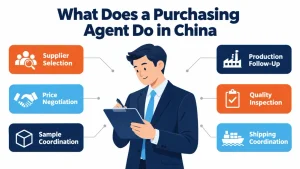
Likewise, the words “purchasing agent” don’t describe one fixed service. One company might only introduce suppliers. Another might manage samples, production follow-up, inspections, and consolidation. Comparing their fees without comparing their responsibilities tells you very little.
Hinsourcing provides purchasing support, so this is a service provider’s perspective. The comparison uses the same tasks for both routes. The sensible choice is the arrangement that covers your order’s needs without paying for work your team already handles well.
What Are the Pros and Cons of Buying Direct from China?
Direct sourcing from China gives you a close working relationship with the manufacturer. That can be useful when your product knowledge is strong and you expect repeat orders. You can develop the relationship around your own specifications, feedback, and purchasing schedule.
It also puts more coordination on your side. Before deciding whether that is a disadvantage, consider whether the work fits your team’s skills and available time. A capable buyer with a familiar product may prefer managing it directly.
The product changes the work involved. Buying an established item with agreed packaging is different from developing a new design. When development is involved, you need someone who can explain the requirements and assess the factory’s proposed changes, whether that person works for you or an agent.
Advantages of Buying Direct
When technical details matter, direct conversations can shorten the path between a question and an answer. Your product manager can explain a drawing to the factory, discuss what is achievable, and review a proposed change without relying entirely on someone else’s interpretation.
You also build your own supplier knowledge. After a successful order, your team knows which documents helped, which details needed clarification, and whom to contact about production. That knowledge can make repeat purchasing easier, particularly when the product and packaging remain stable.
There is no separate purchasing-agent fee when you don’t hire one. For a straightforward repeat order, that can be a genuine saving. The advantage is strongest when your existing team can manage the work without extra hiring, travel, or outside coordination.
You choose which services to arrange separately and when to use them. Direct buying doesn’t require doing every task personally. Depending on the order, you might arrange local support while retaining the supplier relationship and control over commercial discussions.
- Negotiate directly with the manufacturer about specifications, quantities, packaging, and future orders.
- Keep supplier communications and approved product information accessible to your own team.
- Choose inspection and freight providers separately when that arrangement suits your order.
Disadvantages of Buying Direct
Someone must turn supplier answers into decisions. A reply that says production is progressing doesn’t tell you whether the approved material has arrived or whether packaging is ready. Your team needs time to ask useful follow-up questions and act on the answers.
Supplier selection can also take longer than the initial search. Finding companies that sell a product is different from finding one that can meet your particular requirements. You must compare specifications and samples, not just collect prices from suppliers with similar photographs.
Consider an illustrative order with a product factory and a separate packaging supplier. If the product dimensions change, someone must update the box specification, confirm the fit, and coordinate delivery. The workload comes from those dependencies, even if the purchase value is modest.
You can arrange independent checks rather than rely only on the factory. SGS pre-shipment inspection services cover checks such as quantity, dimensions, packing, and marking. With direct purchasing, your team still needs to define the required scope, book the work, and review the findings.
What Are the Pros and Cons of Using a China Purchasing Agent?
A purchasing agent can take over work that would otherwise sit with your team. The benefit depends on the tasks it performs, the product knowledge it brings, and how clearly it reports back. Being located in China is useful, but it isn’t enough by itself.
Ask what you will receive at each stage. Can the agent explain its supplier recommendations? Will updates identify unanswered production questions? You can judge the usefulness of those reports before committing. A promise to “handle everything” leaves too much for you to assume.
Ask who performs the work as well. The person answering your enquiry may coordinate with colleagues, contractors, or an outside inspector. Understand who will assess your product and who will answer questions about the findings, especially if the checks require specialist equipment or knowledge.
Advantages of Using a Purchasing Agent
An agent can help narrow an unfamiliar supplier market. Instead of asking you to review every candidate, it should explain why particular suppliers fit your product, quantity, and budget. You can then focus on the meaningful differences among the remaining options.
Product photographs, video explanations, and coordinated samples give you more to assess than catalogue images. Ask the agent to show the details relevant to your purchase. It should also explain when a photograph isn’t sufficient and you need a physical sample or a specific check.
For multiple suppliers, one coordinator can maintain a shared picture of the order. If a packaging delivery affects final assembly, the agent can connect those conversations and identify what requires your approval. That reduces the need for you to reconstruct progress from separate message threads.
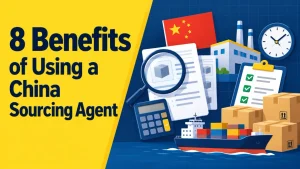
The service can leave your team more time for selling and planning, provided the agent handles the agreed follow-up. You still choose the product and approve important changes. The benefit is having organized information and someone responsible for moving routine work forward.
Disadvantages of Using a Purchasing Agent
The service has a cost, whether it appears as a commission, a fixed charge, or earnings included in the product price. Ask how the agent is paid and what work is included. A low headline fee doesn’t explain the final cost of your order.
An extra contact can also slow technical communication if every question passes through someone unfamiliar with the product. For detailed development work, agree whether your team can speak directly with the factory’s technical staff, with the agent coordinating follow-up rather than interpreting everything.
When an agent recommends a supplier, ask why it chose that company. What did it check, and does a commercial relationship affect the recommendation? You are relying on its judgment, so you need more than the reassurance that it has used that supplier before.
Before hiring, review how to evaluate a purchasing agent in China. Check its actual work, not just its presentation. If you cannot identify what the service adds to your own team’s effort, there is little basis for judging whether its fee is worthwhile.
- Confirm which supplier information and order records you will receive during the project.
- Ask how extra work, repeat orders, and changes to the brief will be charged.
- Establish how urgent questions and unresolved supplier problems will reach you for a decision.
Which Costs Less: A Purchasing Agent or Buying Direct?
Neither route has an automatic price advantage across every order. A manufacturer may offer an attractive product price, while an agent may find a different suitable supplier or negotiate different terms. You need comparable quotations before deciding whether either route saves money.
Start with the same product requirement and the same delivery destination. Then compare what each offer includes. This keeps the discussion grounded in your purchase rather than in general claims that factories are always cheaper or agents always recover their fees.
Compare the payment schedule alongside the total. An offer requiring more money before production starts ties up your cash earlier. Record when each payment becomes due and what you expect to receive or confirm before paying, whichever purchasing route you choose.
Also separate initial setup from repeat-order costs. Supplier search, sample development, or tooling may not recur in the same form. Ask what a repeat order would require and cost, rather than assume the first order’s charges will either disappear or continue unchanged.
Compare the Same Product and Service Scope
A lower unit price can reflect a different material, simpler packaging, a larger quantity, or an excluded service. Before treating it as a saving, confirm what changed. Even an apparently identical product needs a shared specification if you want a useful comparison.
Separate the product purchase from the work required to complete it. This doesn’t mean every provider must use the same pricing model. It means you should be able to explain which goods, services, and delivery arrangements your payment covers, and which remain outside the quote.
- Check material, dimensions, finish, quantity, and packaging against the same written product requirements.
- Identify separate charges for samples, tooling, inspections, handling, storage, or other requested work.
- Compare transport coverage to the same destination, including clearly stated exclusions and local charges.
- Confirm which costs are estimates and which have been agreed for this order.
Delivery terms matter here. ICC’s Incoterms rules allocate costs, risks, and obligations between buyers and sellers. In practical terms, two quotes covering different delivery responsibilities need adjustment before their totals can tell you which purchase arrangement costs less.
For example, a quote ending at a Chinese warehouse and one including onward freight are not equivalent. Obtain the missing transport and service figures before comparing them. An unquoted item belongs in your notes as unresolved, rather than being treated as free.
Keep Cash Costs, Staff Time, and Risk Separate
First compare the cash you expect to pay: goods, services, transport, and other applicable charges. Then record the internal work each option requires. Supplier calls, sample reviews, and resolving discrepancies consume staff time even when they don’t generate a separate invoice.
For illustration, suppose an agent costs $600 more after you compare equivalent goods and services. If you estimate that it removes 20 hours of internal work, that is $30 per hour freed. These are hypothetical figures, not Hinsourcing prices or an industry benchmark.
That calculation helps you judge the fee, but it doesn’t create a $600 cash saving. Salaried staff may still receive the same pay. Decide whether the released time can support worthwhile work and whether your estimate reflects tasks the agent will actually take over.
Keep possible losses separate too. You cannot count the full value of a failed shipment as a guaranteed saving from hiring an agent. Compare the controls each arrangement includes, the problems they can reveal, and who will act if those checks uncover something wrong.
How Do You Choose Between a China Purchasing Agent and Buying Direct?
Start with the order in front of you, rather than deciding your business must always use one model. A stable reorder and a new product launch can require very different levels of help, even when both come from the same country and have similar budgets.
Use these questions before requesting a service proposal. Write down the person responsible for each task and any information you still lack. An unanswered question is more useful than a confident assumption when you are deciding what support to buy.
- Have you verified the supplier’s suitability, or are you still comparing untested candidates?
- Are the specifications settled, or will samples, packaging, and production details need further decisions?
- Can your team follow progress and respond to problems throughout the order?
- Does anyone already coordinate the suppliers, inspections, and shipment preparation you need?
- Can the proposed agent explain which gaps it will cover and what that costs?
For an illustrative repeat order with approved specifications, a proven factory, and an available buyer, direct purchasing may be the simpler choice. For an unfamiliar product involving several suppliers and no local follow-up, a capable agent has more work to contribute.
If most tasks already have a competent owner, avoid paying for a full service simply because it is available. If several important tasks have nobody responsible, agree who will handle them before placing the order. Order size alone doesn’t answer either question.
Can You Buy Direct and Still Use a Sourcing Agent?
Yes, if the service provider accepts that arrangement. You can maintain your factory relationship while arranging help with supplier checks, sample coordination, production follow-up, or inspection. This can suit buyers who understand their product but need someone to handle particular work in China.
Define the boundary in writing. Identify who discusses specifications, who approves changes, who receives payments, and who communicates findings. If both you and the agent can instruct the factory, establish which decisions require your approval so the supplier doesn’t receive conflicting directions.
Consider a hypothetical packaging change after you have approved a product sample. Your team could approve the revised artwork directly, while the agent checks that the factory receives the correct file and follows up on implementation. Delegating follow-up need not mean delegating the design decision.
Discuss the requested scope and fees before work starts, including any existing supplier-introduction agreements. Hinsourcing’s China sourcing services include support for buyers who already have a supplier. Confirm the appropriate arrangement for your product and order stage rather than assume every task is automatically included.
How Hinsourcing Helped a Buyer Choose Products Remotely
An African customer approached Hinsourcing to source novelty keychains in Yiwu without visiting China. His concerns went beyond the product price: how to pay safely, choose the right goods, understand the charges, keep track of timing, and know who would help if something went wrong.
Hinsourcing helped with supplier screening and remote product selection. For this type of request, the team aims to narrow the choice to two or three suitable suppliers, then provides actual product photographs or video explanations. Customers can also request samples before deciding.
Bulk purchasing follows the customer’s confirmation of a satisfactory product. Hinsourcing also separates the goods price, purchasing service fee, and shipping charge. This gives the buyer identifiable costs to review alongside the product, instead of having to judge an unexplained total.
When comparing an agent with buying direct, look for this detail: which suppliers you will assess, how you will review the goods, when you approve purchasing, and how charges are presented. Those are services you can evaluate before committing, without assuming either route guarantees a better outcome.
Frequently Asked Questions
Do I Need a Purchasing Agent for a Small Order?
Not necessarily. A simple stock order from a known supplier may be manageable directly. An order involving unfamiliar products, customization, or several suppliers may justify help. Compare the actual workload and service cost; there is no universal order value at which an agent becomes worthwhile.
Can I Contact the Factory When Working with an Agent?
That depends on the arrangement. Confirm supplier disclosure and communication rules before hiring. You may be able to discuss technical requirements directly while the agent handles coordination, but don’t assume every provider offers that model or uses the same fee structure.
Do I Need to Visit China to Buy Direct?
Not always. You can communicate remotely and arrange local verification or inspection when needed. Someone still needs to assess the supplier, approve the product, and follow the order. The practical question is how those tasks will be completed without your visit.
Does a Purchasing Agent Guarantee Better Quality?
No. Quality depends on the supplier, clear specifications, approved samples, and appropriate checks. An agent can help coordinate that work, but its presence alone guarantees nothing. Ask what will be inspected, what the report includes, and how problems will be handled.
Before You Place Your Next Order
Put your product requirements beside a list of the work your team can realistically manage. You don’t need to outsource everything, and you don’t need to do everything yourself. You need a purchasing arrangement with clear responsibilities and enough information to make sound decisions.
If you want to explore support, share your product, quantity, existing supplier situation, and the tasks you need help with through Hinsourcing’s sourcing and procurement service. Start with the work required for your order, then assess the proposed service and its price together.