Buying wholesale from China can get confusing when several suppliers appear to quote the same product. The lowest offer may exclude packaging, inspection, export charges, or even the material you expected.
At Hinsourcing, we use several practical controls within the agreed scope: comparable quotes, buyer-approved specifications, tracked sample versions, inspection evidence, and named shipping responsibilities. These records give you decisions you can trace instead of assumptions you have to trust.
If you are still deciding whether the market suits your product, first review why businesses source products from China.
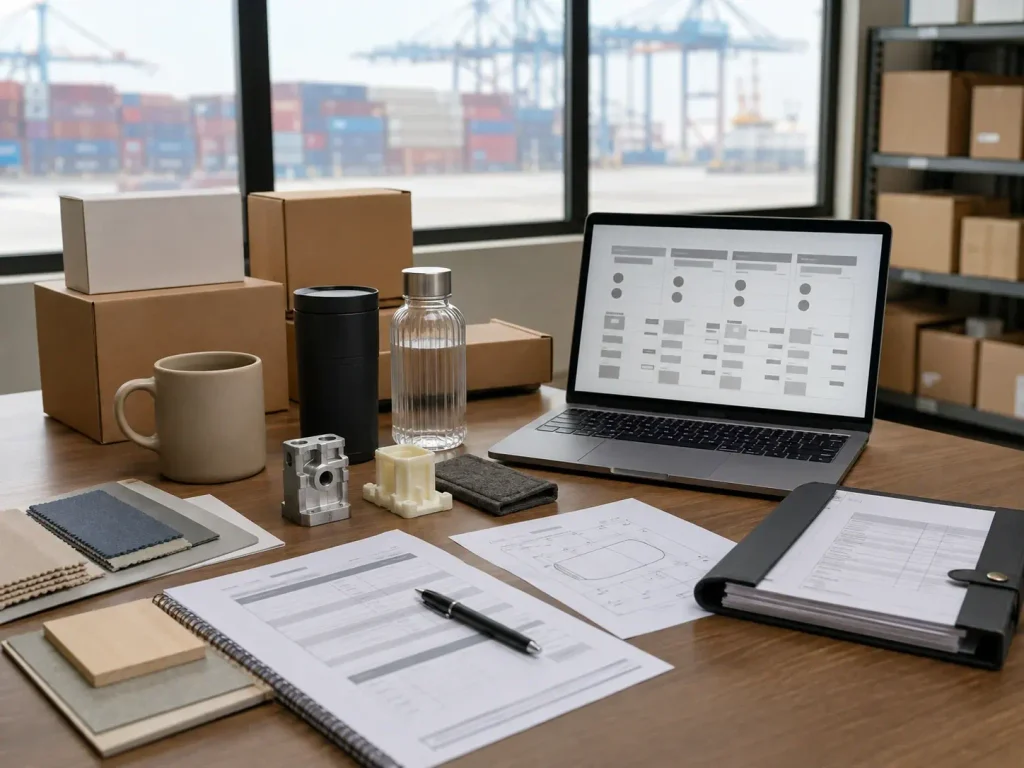
How to Buy Wholesale from China Safely in 6 Steps
To buy wholesale from China safely, define the order, choose a sourcing channel, verify the supplier and quotation, approve a documented sample, monitor and inspect production, then confirm shipping responsibilities and landed cost. Keep evidence from each step before committing more money.
- Define the product, order quantity, destination market, and target landed cost.
- Choose a channel that matches customization, MOQ, and your management capacity.
- Verify supplier identity and compare quotations on identical commercial terms.
- Approve a documented sample and lock specifications before authorizing mass production.
- Track production, inspect the goods, and close defects before shipment.
- Confirm shipping responsibilities, calculate landed cost, and preserve reorder records.
Step 1: Define the Product, Order, and Import Requirements
For a custom order, the buyer-approved brief becomes our reference for quotations, sample approval, and production. Describe what you expect to receive, not just a marketplace photo. Mark unresolved details TBC so the supplier does not fill the gaps with assumptions.
- Product use, reference images, drawings, or an existing physical sample.
- Required materials, dimensions, functions, finishes, colors, and acceptable tolerances.
- Trial quantity, expected order volume, and quantities for each SKU.
- Individual packaging, master cartons, labels, instructions, and shipping marks.
- Destination country, sales channel, and known testing or market requirements.
- Target completion date, delivery location, and preferred quotation basis.
- Quality checks, measurable acceptance criteria, and any critical product features.
- Open questions, permitted alternatives, and the person authorized to approve changes.
Give the brief a version number and date. Send every revision to each candidate still quoting, and record which version supports the sample, quotation, and purchase order.
Before negotiating unit prices, estimate landed cost as goods + packaging + tooling and samples + China-side transport + inspection + international freight + insurance + duties and taxes + clearance and local delivery.
Treat this as a working estimate. Classification, import permissions, labeling, testing, and tax treatment depend on the product and destination. Confirm them before ordering, because packaging minimums, bulky cartons, testing, or destination charges can erase the margin promised by a low unit price.
Step 2: Choose the Right China Wholesale Sourcing Channel
Choose the sourcing channel based on the order. Stock goods, mixed SKUs, private-label changes, and engineered products call for different supplier pools and levels of buyer involvement.
Alibaba.com is a global B2B ecommerce platform, while 1688 is positioned as a domestic wholesale marketplace in China. That difference affects language, payment, domestic delivery, export support, and after-sales communication.
Trade fairs, manufacturing clusters, wholesale markets, direct outreach, and sourcing support can widen the shortlist, but you still need to assess fit. Before committing to a channel, ask:
- Is the product ready made, lightly modified, or fully customized?
- Do you need one factory or consolidation across several suppliers?
- Can your team communicate, verify, inspect, and manage changes directly?
- Can the seller support export documents and your destination requirements?
Trading companies can combine products or handle smaller orders, while factories may suit process-sensitive customization. In either case, confirm who makes the goods, signs the contract, receives payment, and handles quality problems.
Step 3: Verify Suppliers and Compare Like-for-Like Quotes
Ask for the supplier’s full legal Chinese name and Unified Social Credit Code. Check the National Enterprise Credit Information Publicity System against the business license, contract, invoice, and intended bank beneficiary. Registration identifies the entity; it does not prove current capacity or performance.
For larger orders, request a live walkthrough, similar-production evidence, outsourced-process disclosure, or an independent supplier verification and factory audit. Separate the factory, contract party, invoice issuer, exporter, and bank beneficiary. If they differ, document each relationship before paying.
Compare quotes only when every supplier uses the same brief, quantity, currency, Incoterm, and named place. This fictional example assumes 1,000 custom 750 ml stainless-steel bottles in two colors, with a one-color logo and individual kraft box. Values illustrate the method, not current market prices or a Hinsourcing quotation.
| Criterion | Supplier A | Supplier B | Supplier C | Open issue before approval |
|---|---|---|---|---|
| Supplier, brief, and sample | Factory contracts and receives payment; brief V3; pre-production sample S-02 approved | Trading company; manufacturer undisclosed; brief V3; stock sample only | Factory contracts; exporter is beneficiary; brief V3; sample S-01 pending lid check | Verify B’s manufacturer, document C’s beneficiary authority, and close sample gaps |
| MOQ by color | 1,000 total; 500 per color | 500 total; 500 per color; printed-box MOQ 1,000 | 1,000 total; 250 per color | B’s packaging MOQ exceeds its product MOQ |
| Unit price and validity | USD 4.60 each; valid 20 days | USD 4.25 each; valid 10 days | USD 4.75 each; valid 15 days | Prices use different delivery bases |
| Sample, setup, box, and testing | Sample USD 80 credited to order; logo setup USD 120; box included; testing excluded | Sample USD 50; logo setup USD 80; box adds USD 0.35 each; testing excluded | Sample USD 100 credited to order; setup and box included; testing excluded | Confirm who pays for destination-specific testing |
| Delivery basis and lead time | FOB Ningbo; local export charges included; 35 days after deposit and sample approval | EXW Suzhou; pickup and export excluded; 28 days after deposit | FOB Shanghai; local export charges included; 32 days after deposit and sample approval | Request B’s FOB quote and align the lead-time trigger |
| Payment, inspection, and remedies | 30/70; beneficiary matches contract; inspect before balance; rework and reinspection stated | 50/50; beneficiary differs; inspection and remedies not stated | 30/70; exporter is beneficiary; inspect before balance; remedy wording is vague | Document B and C beneficiary authority and clarify remedy terms |
After adding the box, Supplier B matches Supplier A’s unit price before pickup and export costs. Its stock sample, undisclosed manufacturer, and unmatched beneficiary also block approval. Supplier A is the most complete; Supplier C remains viable after resolving the lid specification and beneficiary authority.
Step 4: Approve Samples and Put the Order Terms in Writing
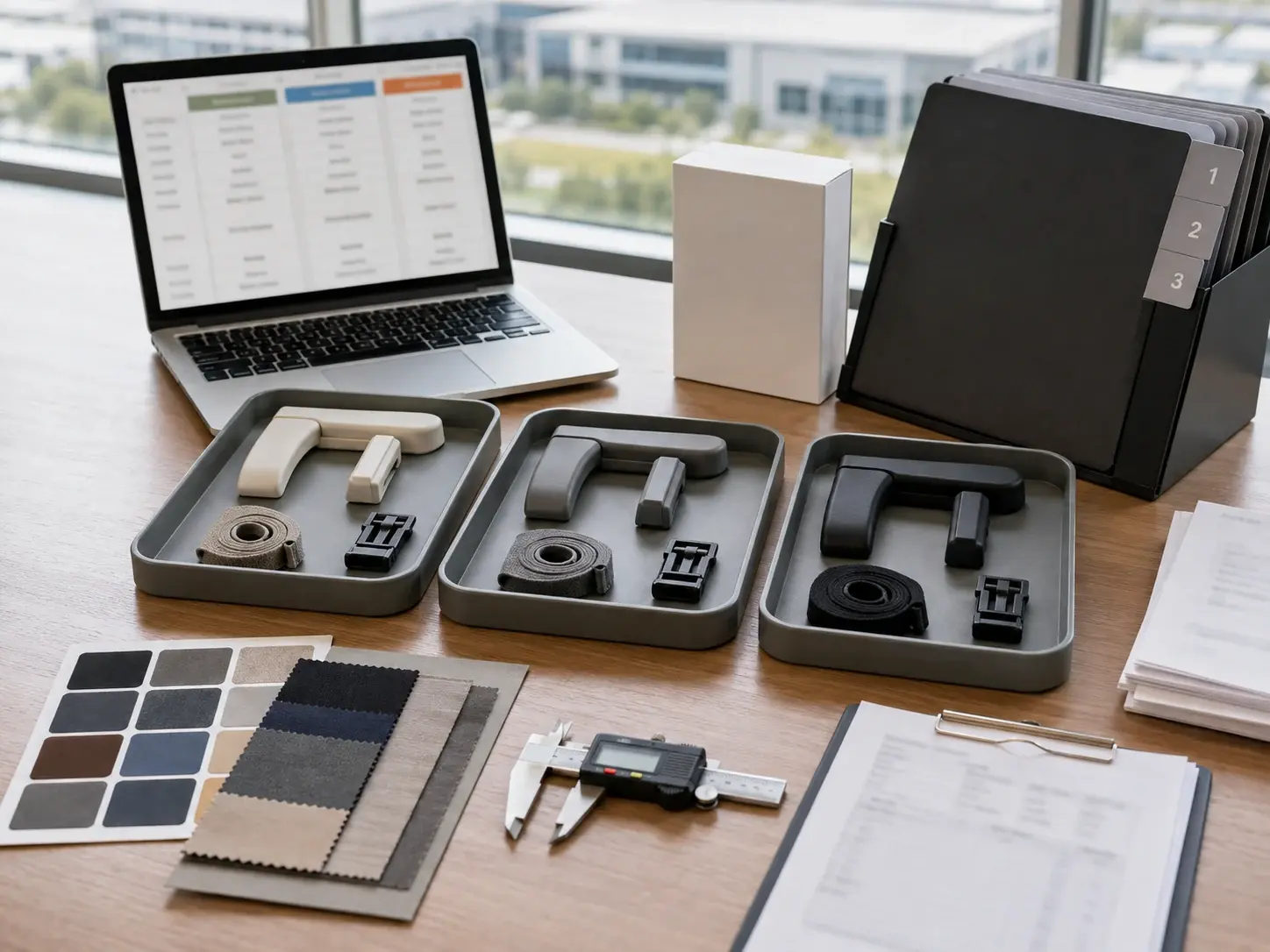
Stock samples show existing workmanship, while development samples test a design. A pre-production sample should use the intended materials and processes. Once approved, a golden sample becomes the production reference, but it still needs written specifications.
Record the sample identifier, version, date, photographs, linked specification, materials, dimensions, functions, packaging, accepted deviations, approver, and retained-sample location. If version two passes, make sure the order does not attach version one.
Before production, record the contracting entities, specification attachments, quantity, price, delivery term, schedule, subcontracting disclosure, inspection, change approval, rework, reinspection, shipment release, and remedies. Payment percentages are commercial terms, not universal safety rules. Tie milestones to evidence and verify bank-account changes independently.
Alibaba.com says Trade Assurance covers eligible online orders paid through its platform, and online records may support claims. Review the applicable terms before relying on it. For higher-value or complex purchases, consider legal review. Platform protection cannot fix a contract signed with the wrong entity.
Step 5: Monitor Production and Inspect Before Shipment
Ask for dated production updates showing the completed stage, quantity, evidence, deviations, and next decision. For process-sensitive goods, inspect incoming materials, the first unit, or early output while corrections are still practical. Require written approval for changes.
Set the inspection plan early. Define timing, scope, sampling, defect classes, measurements, functions, and release evidence. A pre-shipment inspection may cover quantity, dimensions, appearance, functions, packaging, labels, and shipping marks.
ISO 2859-1:2026 provides AQL-indexed sampling plans, but no single AQL suits every product. An AQL value is not a promised defect percentage; defect classes, inspection level, lot size, sample size, and acceptance rules determine the decision.
For managed orders with inspection in the agreed scope, Hinsourcing checks goods piece by piece without a separate inspection fee. This can catch preventable visible or functional defects, but cannot guarantee a defect-free order or replace testing, certificate review, or market assessment.
- Document the affected quantity, severity, photographs, correction, and reinspection result.
- Choose release, conditional release, or hold based on the agreed criteria.
- Pursue rework, replacement, refund, discount, or compensation where the evidence and order terms support it.
Step 6: Plan Shipping, Import Responsibilities, and Reorders
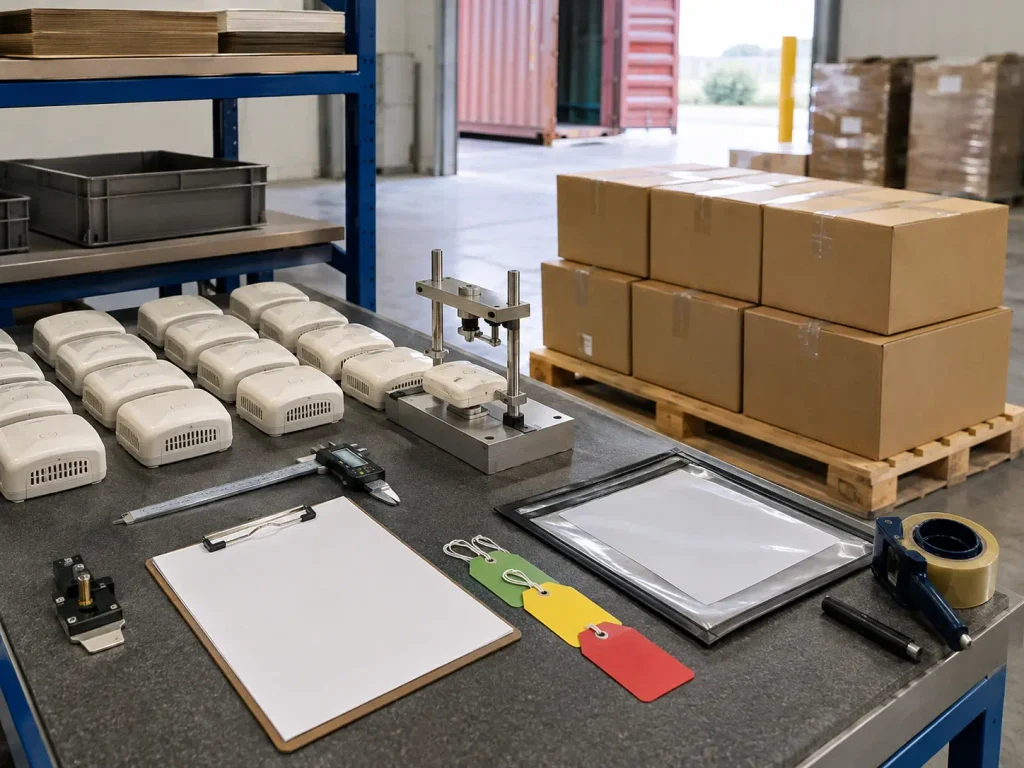
Compare freight quotes only when pickup, destination, carton dimensions, chargeable weight, cargo description, insurance, and delivery scope match. Choose express, air, rail, LCL, or FCL based on urgency, shipment size, damage risk, customs responsibility, and destination charges.
Use the Incoterms® 2020 rule with a named place, for example: FOB Shenzhen Port, Incoterms® 2020. The place shows where cost and risk transfer. DDP puts clearance on the seller, but local rules may complicate it. Confirm the importer, declarations, taxes, documents, and delivery before booking.
When shipping coordination is in our scope, we assign each handoff among the factory, laboratory, forwarder, carrier, customs broker, and importer. Each task should have a named owner and a clear handover record.
- Match the invoice, packing list, transport document, carton data, insurance, and product-specific files.
- Label consolidated cartons by supplier, purchase order, SKU, and quantity for traceability.
- Fix warehouse receiving and cutoff dates to control storage and loading delays.
- Preserve cartons, labels, photos, counts, and first-discovery details for damage or shortage claims.
- Document the shipping and customs coordination scope for multi-supplier orders.
After delivery, reconcile actual landed cost and record shortages, damage, defects, delays, corrective action, and supplier response. Keep final specifications, approved sample, quotation, inspection, and packaging files together. Reconfirm prices, production slot, compliance requirements, and bank details before reordering.
Where Should First-Time Importers Find Low-MOQ Suppliers in China?
For export-ready stock, beginners can start with Alibaba.com, Made-in-China, or Global Sources. Buyers with reliable local support can also search 1688. Custom products usually require a manufacturer matched to the process, not simply the marketplace with the most listings.
Low MOQ is easier when the product already exists and uses neutral packaging. Custom materials, printing, molds, or boxes can introduce separate minimums even when the final product MOQ looks low.
Ask suppliers to separate the total order minimum from minimums for materials, colors, sizes, packaging, and printing. This reveals the actual inventory commitment across variants.
A representative trial gives better evidence than the smallest possible order. It should test the intended material, production process, packaging, and shipping route.
Is Alibaba Enough to Build a Private-Label Brand?
Alibaba can help you build a supplier shortlist, but marketplace access does not define or control a private-label product.
Printing a logo on stock goods is not a complete private-label process. You still need controlled specifications, design rights, sample versions, packaging files, labels, testing decisions, and change records.
The platform may be enough if your team manages those tasks and verifies suppliers. Local support may help with complex development, several factories, or on-site follow-up.
Assign each approval to a named person and keep the decision with the order record. A longer supplier list does not solve weak product control.
What Is the Largest Wholesale Market in China, and Is It Right for You?
Yiwu International Trade City, also widely known as the Yiwu International Trade Market, is the best-known answer for small commodities. The Yiwu government describes it as the world’s largest small commodity wholesale market.
Its scale comes from the breadth of small commodities. Buyers sourcing technical components, heavy goods, process-sensitive products, or categories clustered elsewhere may find another region more suitable.
Use the market to compare products and find candidates. Then check the legal seller, factory relationship, specifications, export capability, beneficiary, and quality responsibility. A booth is not proof of manufacturing.
Mixed-SKU orders also need carton matching, label and quantity checks, damage records, storage controls, and a consolidated shipment record.
Common Mistakes When Buying Wholesale from China
Many costly problems begin before production and become harder to fix once materials are ordered or goods are finished.
- Sending only a product photo, which allows every supplier to quote a different interpretation.
- Choosing the lowest unit price without comparing materials, packaging, exclusions, and landed cost.
- Treating a marketplace badge or factory label as complete supplier verification.
- Approving a sample without recording its version, deviations, and linked specifications.
- Defining inspection after production, when correction options and negotiating power are limited.
- Paying a changed or unrelated account before independently confirming the request.
- Accepting a vague DDP quote without identifying importer, taxes, documents, and destination charges.
Can You Buy Wholesale from China Without a Sourcing Agent?
Yes. Direct purchasing can work for standard products, one capable supplier, and buyers who can prepare specifications, verify entities, compare quotations, manage samples, follow production, arrange inspection, and coordinate import work.
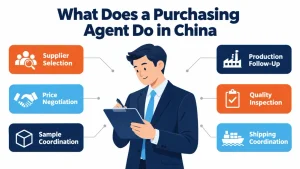
An agent may help with customization, several suppliers, local verification, or production follow-up. The agent does not replace your approvals, product responsibility, or importer obligations.
Do not choose by service fee alone. Check quotation disclosure, compensation, included tasks, and backup. An individual or company can work if its capacity and process fit.
Use this guide to learn how to find a purchasing agent in China before hiring.
Frequently Asked Questions
What Is the Best Website to Buy Wholesale Products from China?
The best channel depends on the order. Alibaba.com serves international B2B sourcing, while 1688 focuses on China’s domestic market. Made-in-China, Global Sources, trade fairs, wholesale markets, direct outreach, and referrals may suit particular products or sourcing requirements.
What MOQ Should You Expect When Buying Wholesale from China?
Chinese suppliers do not share one standard MOQ. The minimum may depend on material batches, tooling, packaging, printing, and each color or size. Ask suppliers to separate product MOQ from variant and packaging minimums, then compare the total inventory commitment.
Do You Need a Business or Import License to Buy from China?
Buying and legally importing are separate issues. Registration, importer numbers, licenses, labeling, testing, and tax obligations depend on your product and destination. Check current requirements with the relevant customs and product regulator, or consult a qualified customs professional before ordering.
What Is the Safest Way to Pay a Chinese Wholesale Supplier?
No payment method removes every risk. Verify the seller and beneficiary, document specifications and milestones, pay through the agreed channel, and retain evidence. Platform protection applies under its current terms; letters of credit and staged transfers require their own checks.
How Do You Calculate Landed Cost from China?
Add the goods, packaging, tooling, samples, China-side transport, inspection, international freight, insurance, duties, taxes, clearance, and local delivery. Use the actual Incoterm and destination. Reconcile the estimate after delivery so the next order uses evidence rather than assumptions.
Make Your First Wholesale Order a Repeatable Process
A controlled order leaves one brief, comparable quotations, a checked entity, an approved sample, written changes, an inspection decision, and a final cost record. Keep that evidence for reorders.
When the agreed scope covers these stages, Hinsourcing keeps them connected as one documented project. If you want a China-based team to coordinate the order, review China sourcing support for wholesalers and distributors.
To discuss a specific order, contact Hinsourcing with your product specifications, expected quantities, target market, packaging requirements, destination, and current sourcing challenge.