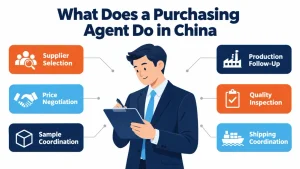
Finding a product online can take minutes. Deciding which supplier to trust, confirming the sample, and getting the finished order ready to ship require much more attention. For an overseas buyer, that work can quickly become a second job.
When I assess a sourcing agent’s value, I look at the work they take off your hands and whether their advice helps you make better decisions. A negotiated discount is useful, but so is discovering a specification mismatch before production starts. Both deserve attention when you’re deciding what support to pay for.
What Is a Sourcing Agent?
A sourcing agent is a person or company hired to carry out agreed purchasing work on your behalf. In China, that can include finding suppliers, clarifying requirements, coordinating samples, and following orders through production and shipment preparation.
The agent isn’t necessarily the manufacturer, and the services included vary. You should know who makes the goods, who sells them, and what the agent is responsible for. Our guide to what a sourcing agent does explains the role in more detail.
What Are the Benefits of Using a China Sourcing Agent?
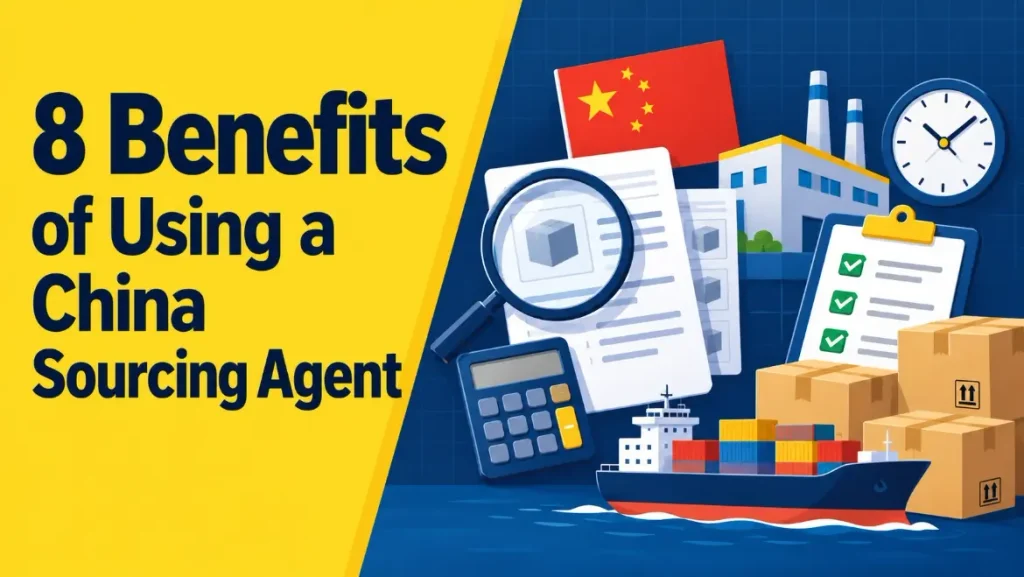
A capable China sourcing agent helps you choose suitable suppliers, verify information locally, communicate specifications, and coordinate the order through to shipment. The practical benefit is having someone responsible for the agreed follow-up in China, with findings and decisions brought back to you. These eight areas are worth discussing before you hire.
1. Find Suppliers That Fit Your Product and Order
A supplier can sell the product you want without being a good match for your order. Its minimum quantity may be too high, or its customization capabilities and schedule may not suit your plans. A sourcing agent narrows the search by comparing product experience, materials, production capabilities, order quantities, and delivery plans against your requirements.
Imagine you need a small run of branded storage bags. A factory focused on large orders of standard bags may offer an attractive unit price but require more stock than you can use. Another supplier may fit your quantity and packaging better. Recognizing that difference saves you time spent pursuing an unsuitable offer.
A useful shortlist explains why each supplier is worth considering and what still needs checking. You can compare credible options without chasing every company yourself. I would judge this service by the quality of the comparison, not the number of supplier links delivered.
2. Assess Suppliers Without Traveling to China
Once you have candidates, a local sourcing partner can coordinate factory visits and examine actual products. You receive findings without the time and expense of traveling for every check. Before arranging a visit, agree on what you need to learn:
- Which production processes happen at the site, and which are subcontracted?
- Does the equipment suit the product you want to make?
- For a stock purchase, do the actual goods and available variants match your requirements?
- Will the report include dated photographs, observations, and questions that need further investigation?
A factory visit should give you enough detail to judge the supplier’s suitability. A message saying everything looks fine isn’t enough. If something needs a closer look, ask the agent to investigate it. Remember that a visit shows conditions at one point in time; later production still needs follow-up.
3. Communicate Product Requirements More Clearly
Translation software helps you exchange messages. It doesn’t necessarily reveal that you and the supplier are picturing different products. An agent with relevant product knowledge can ask follow-up questions about materials, measurements, colors, finishes, labels, and packaging, turning broad descriptions into requirements the supplier can work with.
Illustrative example: Imagine you approve a gift box, then ask for a thicker insert and a different logo position. Forwarding a new image leaves room for confusion about which details have changed. The agent can confirm both revisions with the supplier and coordinate updated artwork or a sample for your approval.
After approval, keep that version attached to the order, so purchasing and production use the same reference. If the supplier proposes a substitute, ask how it affects price, appearance, or timing before deciding. This gives you fewer conversations to untangle and less risk of a casual agreement becoming an unwanted production change.
4. Compare Total Costs and Negotiate Better Terms
Two quotations can appear comparable while covering different products or services. A China purchasing agent can request quotes on the same basis and identify differences before negotiations begin. These are some of the details worth comparing:
| Quote Detail | What the Agent Should Clarify |
|---|---|
| Product and packaging | Does the price cover the agreed specification and retail packaging, or only the bare item? |
| Quantity per color | Does the lower unit price require more stock than you can use? |
| Sample charges | Which samples or changes are included, and which cost extra? |
| Local delivery | Is delivery included, or do you need to arrange collection? |
Compare the cost of the order you actually need. A smaller opening order may be more useful than a lower unit price tied to excess stock. Discuss the production schedule alongside the price, too. A cheaper quote may reflect a better offer, a changed specification, or an omitted cost; an agent cannot promise every purchase will cost less after fees.
At Hinsourcing, we list the goods price, purchasing service fee, and shipping charge separately. That gives customers distinct costs to review rather than one unexplained total. Ask any provider which additional items remain unconfirmed.
5. Catch Quality Problems Before Shipment
Approving a good sample is a useful start. It doesn’t show whether the bulk order matches it.
What Should Be Checked?
An agent can coordinate checks against your specifications and approved sample, covering agreed measurements, workmanship, quantities, labeling, packaging, and suitable functions. Confirm whether the inspection covers a sample or every unit and how findings will be reported. QIMA’s explanation of pre-shipment inspection describes this stage. Material composition or performance may require separate testing; a visual inspection alone cannot establish everything.
What Happens if the Goods Fail?
Someone needs to document the discrepancy, discuss the supplier’s response, and bring the proposed solution back to you. A packaging error found before the goods leave China can be discussed and corrected before onward shipment. Finding it after overseas delivery creates more handling and transport decisions. The report should help you decide whether correction is needed or the goods can ship.
6. Keep Production and Order Changes Under Control
After placing an order, silence can be difficult to interpret. Production may be on schedule, waiting for materials, or held up by a question nobody has answered.
- Check progress against agreed milestones. The agent should explain what’s finished, what’s outstanding, and which decisions the supplier needs from you. “The factory is working on it” gives you little to act on.
- Review changes before they reach production. If a supplier proposes a different component, the agent can collect the reason and relevant details for your decision. The supplier should wait for the required approval before using it.
- Reconfirm the details when reordering. Materials, packaging, and lead time may need updating. An old purchase order is a reference, not confirmation of current conditions.
Follow-up cannot guarantee an unchanged delivery date. Its value is giving you earlier notice and a chance to respond. You might approve an alternative, adjust a launch, or discuss a partial shipment rather than discover the problem on the planned dispatch day.
7. Coordinate Multiple Suppliers and Shipments More Easily
Imagine a project where one factory makes the product, another supplies gift boxes, and a third prints inserts. Each supplier could finish its own work correctly while the combined order remains incomplete. The boxes may arrive before the products, or the inserts may hold up final packing. Someone needs to connect those separate orders.
- Getting everything ready: An agent can track readiness dates, local receiving, and packing, while keeping the freight provider informed. You have an agreed contact who can explain what’s ready, where it is, and what’s still missing.
- Deciding what ships together: Consolidation can reduce separate shipments, but storage, handling, and waiting time also matter. If one supplier is late, the agent can bring you the choice between waiting and moving the ready goods first.
Before dispatch, confirm who handles each stage and where the shipping quote ends.
Check the handoff: Receiving goods at a warehouse doesn’t automatically mean they have been inspected or prepared for your destination.
8. Free Up Time to Grow Your Business
Supplier follow-up arrives in small pieces: a sample question, a revised price, a request for packaging approval, then another message about collection. Even when none is difficult, the interruptions can consume a large part of your working day.
Your agent handles the agreed daily work. That can include collecting information, chasing routine answers, and organizing approved specifications, packaging files, and previous issues. You spend less time reconstructing agreements and more time selling the product and serving customers. The records also give repeat orders a starting point, with checks for anything that has changed.
You keep the important decisions. Set out who approves supplier selection, budget changes, samples, and shipment release. Agree on how urgently the agent should contact you when a decision affects timing. With those responsibilities clear, you can delegate follow-up without handing over purchasing control.
How Much Does It Cost to Hire a China Sourcing Agent?
The cost depends on the charging model, the work involved, and the service scope. Compare what is included before comparing fees. A quotation for supplier introduction alone isn’t equivalent to one covering samples, production follow-up, and inspection coordination.
| Pricing Model | How It Works | What to Confirm |
|---|---|---|
| Commission | A fee based on an agreed portion of the order value | Calculation basis, minimum charge, and included work |
| Fixed Project or Task Fee | A set price for a defined project or service | Deliverables, revisions, visits, and extra work |
| Time-Based or Ongoing Support | Payment for working time or a defined period of support | Rates, included hours or tasks, and approval of extra work |
| Included in the Product Price | The provider earns through the quoted goods price | Product specification, included services, and separate charges |
Providers publish different arrangements. For example, Hinsourcing plans illustrate commission and product-price models, while Sofeast publishes fixed and time-based fees. These are examples, not industry-wide rates.
Ask whether samples, testing, warehousing, and freight are separate. If someone describes the service as free, clarify how the business earns its income and compare the complete offer.
How to Find a Purchasing Agent in China
Start with candidates who can explain their experience with your product category and the work you need. A professional website is useful background, but you still need to assess the proposed service.
- Search Google and company websites using your product category alongside “China sourcing agent.”
- Use LinkedIn and professional contacts to identify relevant experience and consistent business information.
- Ask other importers or trade-show contacts for introductions, then find out what the agent actually handled for them.
Send shortlisted providers the same brief so their answers are easier to compare. Our guide to how to find a purchasing agent in China covers the checks to make before hiring.
How Do You Work with a China Sourcing Agent?
Start by explaining what you need and agreeing who will do what. These six steps give you a basic working sequence, although your project may need additional development, testing, or specialist support. At each stage, confirm what the agent will deliver and what you need to approve.
- Share Your Product Requirements. Provide product references, specifications, quantities, budget, destination, and target timing. Identify requirements that cannot change and details where you are open to alternatives.
- Agree on Services and Fees. Confirm the work included, any separate charges, communication arrangements, and approval responsibilities. If you already have a supplier, explain which tasks you want help with rather than restarting the whole search.
- Review Suppliers, Quotes, and Samples. Assess the recommended options and their unresolved questions. Confirm the product version, packaging, and supplier before authorizing bulk purchasing. Ask for a physical sample when appearance, feel, or fit is important.
- Confirm the Order and Payment Arrangements. Review the written specifications, quantities, delivery terms, and payment milestones. Establish who receives each payment and how the purchasing records will be shared. Don’t assume every project follows the same payment schedule.
- Follow Production and Review Inspection Results. Receive updates against the agreed milestones. Review proposed changes and any inspection discrepancies, then confirm the corrective action or shipment decision through the agreed approval process.
- Arrange Shipping and Follow Up After Delivery. Confirm packaging, dispatch arrangements, and document handoffs. Check the shipment when it arrives and promptly document any problems. Discuss next steps with the agent and supplier under the agreed terms, then carry useful findings into future orders.
How Can You Tell Whether a China Sourcing Agent Is Delivering Value?
Look at the information and follow-up you receive, not just how quickly messages are answered. A useful update should help you decide something or show that an agreed task has been completed. You shouldn’t have to reconstruct the order from disconnected screenshots. Use these questions to review the service:
- Can the agent explain why the shortlisted suppliers suit your requirements?
- Do the quotations identify the same specifications and any excluded costs?
- Are approved samples and subsequent changes recorded clearly?
- Do production updates identify progress, outstanding problems, and next actions?
- When an inspection finds an issue, is someone following it through to a decision?
- Are fees, responsibilities, and your approval rights clear?
Before committing, ask to see a sample comparison or report with customer details removed. You can discuss whether it gives you the information you need without requesting another customer’s confidential records.
A useful measure is whether the agent helps you make informed decisions with less routine work. Cheap service that leaves you chasing every detail may offer little benefit; a higher fee needs equally clear justification in the work provided.
How Hinsourcing Supports Your China Sourcing Project
At Hinsourcing, we help overseas buyers find suitable products and suppliers, with purchasing support matched to the project. Depending on the agreed scope, that can include supplier screening, sample coordination, production follow-up, product checks, packaging, consolidation, and shipping coordination.
- We narrow product options to a manageable selection, with actual photographs, video explanations, or samples where needed.
- We move ahead with bulk purchasing once you have confirmed a satisfactory product.
- We list the goods price, purchasing service fee, and shipping charge separately for review.
- You make the important choices while we handle the agreed follow-up, whether you’re assessing a new supplier or preparing a repeat purchase.
To discuss support, share your sourcing requirements with Hinsourcing. Include the product, quantity, destination, existing supplier situation, and the parts of the purchase you need help managing. That gives us a practical starting point for discussing services and fees.
FAQs About Using a China Sourcing Agent
Before hiring, buyers also want to understand the cost, whether existing suppliers can be retained, and how much control they will keep. These questions help define a useful working arrangement before the first order begins.
Is a China Sourcing Agent Worth the Cost?
An agent can be worth the cost when supplier evaluation, product coordination, or local follow-up would otherwise stretch your team. Assess the specific work you receive rather than assume the fee will always be recovered through a lower product price. Our comparison of a China purchasing agent versus buying direct examines the decision in more detail.
Can a Sourcing Agent Help If I Already Have a Supplier?
Yes, if the provider accepts that scope. You can ask for support with samples, production follow-up, inspection arrangements, or shipping coordination while keeping your existing supplier. Agree on who communicates instructions to the factory and which decisions require your approval.
Can Small Businesses Benefit from a China Sourcing Agent?
Yes. A small team may benefit from having someone handle unfamiliar products or several suppliers. The amount of help needed depends on the complexity of the work as well as the order value. Request a scope and fee that fit the purchase instead of assuming a full-service arrangement is always necessary.
Will I Still Have Control Over My Purchasing Decisions?
You can retain control over supplier selection, specifications, budgets, and shipment approval. Put those responsibilities in the agreement, including how changes will be presented and approved. Also clarify access to supplier information and purchasing records, since providers do not all use the same working model.