Looking for a factory in China? Don’t send inquiries yet. First, define the product, quantity, quality requirements, and delivery terms clearly enough to quote. Then compare candidates on the same basis, confirm who takes the order and who actually produces, and test with samples or a trial order.
Still deciding whether China suits your product? Start with why businesses source products from China, then factor in freight, lead time, and inventory pressure. Wherever you find a company, treat it as a candidate until you have checked its business license, quote, production setup, and samples.

What’s the difference between a manufacturer and a supplier?
“Supplier” is a broad term. Manufacturers, trading companies, wholesalers, distributors, and sourcing companies can all sell to you. Before moving forward, ask who makes the product, who signs the contract, who receives your money, and who handles defects.
Manufacturer or factory
A manufacturer controls the main production process, though it may subcontract specialist work. Direct factory contact often helps with customized or process-sensitive products. Even then, the factory must show that it can handle your product and order size.
Trading company or supplier using partner factories
A trading company coordinates factories and sells to you. Some suppliers make certain items themselves and use partner factories for others.
Both models can suit smaller orders or mixed categories if you know where the goods come from, who gets paid, who answers technical questions, and who is responsible for quality problems.
Wholesaler, distributor, or sourcing agent
Wholesalers and distributors often carry stock and accept smaller orders, but offer less customization. A sourcing agent is hired by a buyer to help search, communicate, and follow up. In every case, check what the other party actually does, what it will disclose, and where its service ends.
| Who you found | When it may suit you | What to watch | What to ask for |
|---|---|---|---|
| Factory or manufacturer | Custom products, ongoing production, or repeat orders | Often prefers larger, steadier orders | In-house and subcontracted processes, equipment, and quality records |
| Trading company or supplier using partner factories | Mixed categories or smaller runs | Whether it discloses the actual producer | Factory source, technical contact, and quality responsibility |
| Wholesaler or distributor | Stock goods and orders with many SKUs | Limited customization and possible batch differences | Stock ownership, batch details, product documents, and available quantity |
| Sourcing agent or company | Local search and coordination in China | Added fees and another party to check | Scope, pricing, deliverables, supplier disclosure, and who receives each payment |
Where can you find manufacturers and suppliers in China?
No single channel covers every suitable supplier. You will usually only need two or three, chosen around your product, process, order size, and working language. Also consider whether you can properly check the companies you find.
English-language B2B marketplaces
Alibaba.com, Made-in-China.com, and Global Sources are useful for building a shortlist and learning about a category. Treat platform badges as leads, not proof. Alibaba’s Verified Supplier information says its assessment is not a guarantee of a seller or its products.
Global Sources separates registration checks, manufacturing business scope, and optional supplier capability assessments. Made-in-China.com publishes third-party audit reports for manufacturers and traders. Check which company and location were assessed, what the report covers, and its date.
1688 and other domestic Chinese channels
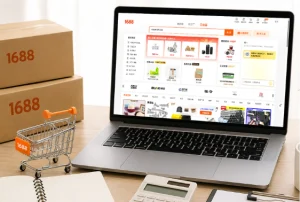
1688 can help you find wholesalers and suppliers that mainly serve China’s domestic market. A listing price may cover one quantity tier, basic configuration, domestic package, or product variant. Confirm the seller, exact specification, export arrangement, and total cost before comparing offers.
Trade fairs and manufacturing clusters
Trade fairs let you handle samples and question several companies quickly. Use the Canton Fair Buyer Guide to plan meetings. Record each exhibitor’s Chinese company name, relevant processes, sample number, and promised documents.
If your product comes from an established manufacturing cluster, search the relevant region by production process. Related factories and specialist processors often operate nearby. Location makes a company worth checking, but does not prove that it suits your order.
Google, industry directories, referrals, and trade data
On Google and industry directories, combine the product name with its process, material, application, or manufacturing region. Trade records and referrals can reveal more leads. Put every candidate through the same identity and capability checks, regardless of where you found it.
China sourcing companies and sourcing agents
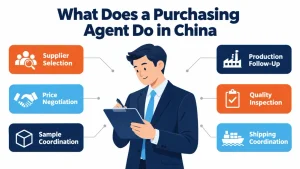
If Chinese-language channels or factory visits are difficult for you, a local team can search, check company details, visit sites, and collect comparable quotes.
Before choosing a China sourcing and procurement service, read its proposal. It should explain what will be checked, recorded, disclosed, and which decisions still require your approval.

How to find manufacturers and suppliers in China: 6 steps
These six steps cover screening before you place an order. Contracts, production, inspection, shipping, and repeat orders need separate controls. Those later stages are covered in how to buy wholesale from China safely.
Step 1: Keep a clear record of every candidate
Create one row for each company. Record its legal name, where you found it, whether it appears to be a factory or trader, product fit, available documents, unanswered questions, and next action. This stops similar companies from getting mixed up later.
Label each claim as “stated by supplier,” “document checked,” “seen live or on site,” or “not checked.” Remove obvious mismatches before asking the remaining candidates to quote against the same brief.
Step 2: Check who makes the goods, signs the contract, and gets paid
Ask for the Chinese legal name on the business license and the Unified Social Credit Code, China’s unique company identification number. Compare the National Enterprise Credit Information Publicity System record with the license, quote, contract, invoice, and the account holder or beneficiary name you are asked to pay.
China’s State Administration for Market Regulation says the system also publishes penalties, spot checks, inspections, and abnormal-operation records. These records show how the company is legally registered. They do not prove production capability or suitability for your order.
If several companies appear across the quote, contract, and payment instructions, ask four questions:
- Which company performs the main production processes for this product?
- Which company signs the contract and issues the commercial documents?
- Which person or company receives each payment from the buyer?
- Who investigates defects, arranges rework or replacement, and carries the agreed contractual responsibility?
Several companies or individuals in one transaction do not automatically signal a problem. Before paying, get a written explanation of how they are related, who can act for whom, where each payment goes, and what each party is responsible for.
Step 3: Ask everyone to quote the same requirements
Send each serious candidate the same request for quotation (RFQ). Keep the quantity, specification, packaging, currency, delivery basis, and response format consistent. Require written assumptions and exclusions. If the requirements change, number and send a new version rather than overwriting the original comparison table.
At a minimum, compare:
- Materials, construction, process, finish, tolerances, alternatives, and MOQ for each SKU.
- Tooling, samples, packaging, testing, inspection, China-side handling charges, and setup costs.
- When lead time starts, capacity assumptions, Incoterms® rule and named place, payment timing, and who receives payment.
- Subcontracting, change approval, rework, replacement, warranty, and contractual responsibility.
Step 4: Look beyond the unit price
A unit price only helps when every supplier quotes the same product specification, quantity, packaging, and delivery terms. A lower number may exclude packaging, use another material, double your inventory, or use EXW while another company quotes FOB.
I also watch how a supplier communicates. A good candidate asks process-specific questions, explains limits, identifies what still needs confirmation, and records changes in writing. A fast but vague reply still leaves you unable to decide.
This fictional example compares 1,200 powder-coated steel display stands in two colors, with a printed logo and flat-pack cartons. The figures show the method only. They are not current market prices.
| What you’re comparing | Supplier A | Supplier B | Supplier C |
|---|---|---|---|
| Who sells and who produces | Factory seller; coating is subcontracted | Trading company; factory not disclosed | Export company; production factory disclosed |
| Brief version and delivery basis | V4; FOB Ningbo | V3; EXW factory | V4; FOB Shanghai |
| MOQ and color split | 1,200 total; 600 per color | 1,200 per color | 1,200 total; 600 per color |
| Price and missing costs | USD 7.80; individual carton included | USD 7.20; carton adds USD 0.45 | USD 8.05; carton and logo setup included |
| Evidence and next issue | Sample dimensions pass; coating control not checked | Stock sample only; on hold for missing evidence | Sample function passes; color needs approval |
After adding the carton, Supplier B comes to USD 7.65 per unit, with pickup and export still excluded. Its color MOQ also doubles the order. Supplier A currently has the clearest supporting evidence, while Supplier C remains an option after color approval.
Step 5: Check the factory more closely as the risk rises
Not every order needs the same depth of checking. Standard stock goods may only need records checked online. New tooling, tight tolerances, safety-sensitive products, or an order with more money at risk may justify an on-site review.
I find four practical levels useful when planning the checks. They are not a fixed standard for every project, so you can stop at the level that matches your risk:
- Check documents: review company identity, public records, certificates, contacts, and who receives payment.
- Add live video: ask to see specified equipment, materials, records, and production areas in real time.
- Visit when needed: review similar production, quality controls, subcontracting, and scheduling evidence.
- Use a specialist: bring in a qualified auditor, inspector, or laboratory for defined technical questions.
During a live or on-site review, follow a similar product through materials, production, subcontracting, inspection, and packing. Match each certificate to the company, location, product, standard, scope, and validity period.
A supplier verification and factory audit report should separate verified findings, concerns, unresolved points, and items not checked. It records what was examined within the agreed scope at that time. It does not replace product testing.
Step 6: Check samples, then try a small order
A stock sample shows existing workmanship. A prototype tests the design. A pre-production sample should use the materials and process intended for mass production. Tie every approval to a specific version of your written specification.
I would not accept “looks good” as the full sample record. At minimum, keep the sample number, version, date, photos, material, dimensions, functions, finish, packaging, accepted deviations, approver, and location of the retained sample. Production needs clear reference points.
My view is simple: a good sample proves that one sample is good. It may use selected materials or extra handwork. A small trial order can test consistency, communication, packaging, documents, and inspection before you increase the volume.
After reviewing the documents, quotes, and samples, give each candidate a clear status:
- Approved: only for the reviewed product, scope, and order terms.
- Conditionally approved: record open items, who is responsible, required evidence, and deadlines.
- On hold: wait while an important question remains unanswered or unverified.
- Rejected: record the specific reason and supporting evidence.
When does a China sourcing agent make sense?
I do not think every buyer needs a sourcing agent. You may be able to source directly if your team can prepare the brief, compare quotes, manage samples, and arrange checks in China.
If language, factory visits, or coordination across several suppliers still feels difficult, read how to find a purchasing agent in China. Check the agent’s identity, fees, disclosure, scope, and who receives payment before hiring.
Finish with a shortlist you can explain
Finding company names in China is easy. Deciding which supplier deserves the next step takes more care. A clear brief, comparable quotes, checked company details, and controlled samples help you choose whether to continue, pause, or walk away.
My rule is simple: every decision should point back to evidence. Before increasing an order, know who makes the product, who gets paid, what has been checked, and which questions remain open. If you cannot explain those points, keep checking.
For help turning product details and supplier conversations into a practical search or verification plan, contact Hinsourcing with your expected quantity, current supplier status, and biggest unanswered question.
Frequently asked questions
What is the best website for finding Chinese manufacturers?
No one website covers every product. Alibaba.com, Made-in-China.com, Global Sources, 1688, Google, and trade fairs help you reach different suppliers. Choose according to your product, process, order size, and working language, then verify each candidate.
Is an Alibaba Verified Supplier reliable?
I treat a Verified Supplier assessment as screening information, not proof that the supplier is reliable or right for your order. Check its scope and date, then verify the specification, production capability, legal seller, payment recipient, samples, and applicable product requirements.
Should you pay for samples before choosing a supplier?
A sample fee is usually a normal evaluation cost. Before paying, confirm the sample type, specification version, tooling, courier fee, completion date, ownership, and whether the fee can be refunded or credited against a later order. Check the sample against written requirements, not appearance alone.