If you’re deciding whether to buy wholesale from China or India, we’d start with China when you plan to expand a product range or need several suppliers to develop it. The supply networks discussed below are a strong reason to look there first.
India deserves a place on the shortlist when a particular craft or material suits your brand. Hinsourcing specializes in China sourcing. The recommendations here draw on public industry sources and our purchasing approach; they aren’t based on firsthand supplier testing in both countries.
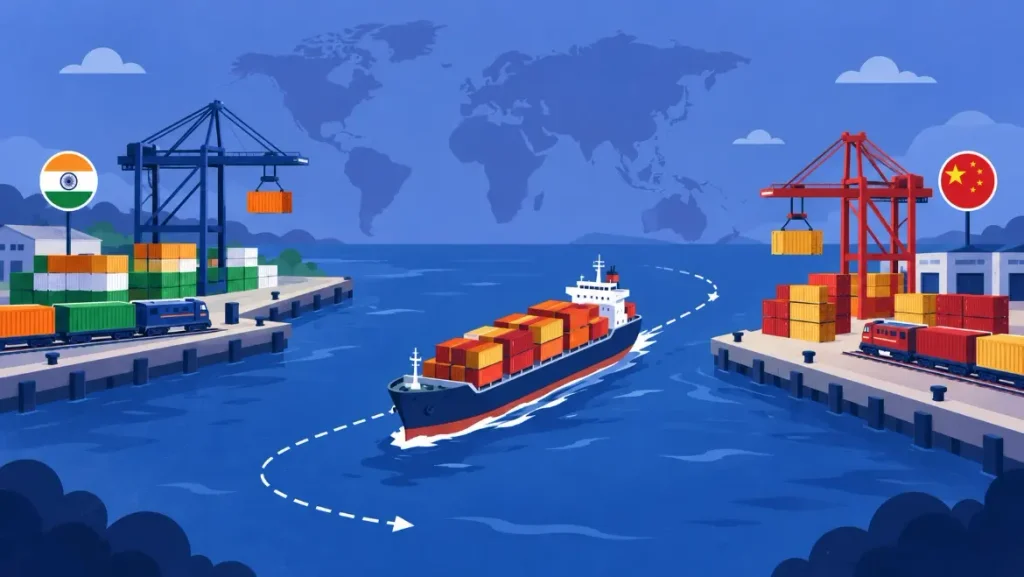
China vs India: Which Fits Your Wholesale Order?
Start with Chinese suppliers for component-based products and ranges you expect to expand. Include Indian specialists for handprinted textiles or distinctive decorative goods. The table below sets out what we’d investigate for each order type. Use the same requirements to compare candidates, rather than giving either country a blanket endorsement.
| Your order | What to explore in China | What to explore in India | What should decide |
|---|---|---|---|
| Product and process | Electronics suppliers and supporting components | Specialists in handprinted textiles, woodware, and metal decor | Relevant product and process evidence |
| Stock or custom | Wholesale stock and manufacturers offering modifications | Available collections and suitable custom producers | Exact changes included in the offer |
| Small first order | Existing materials and stock options | Existing designs and available production slots | Quantity per style, color, and packaging version |
| Repeat purchases | Reusable approved specifications and supplier relationships | The same evidence from shortlisted suppliers | Repeatability and recurring costs |
| Delivery to your market | A quote covering the actual shipment and destination | An equivalent quote for the same destination | Complete charges, responsibilities, and timing |
The category examples below explain these starting points. They aren’t a price survey. If neither country’s suppliers can meet your budget and required arrival date, consider simpler customization or local stock before committing money overseas.
What Are the Advantages of Buying Wholesale from China and India?
Advantages of Buying Wholesale from China
China has concentrated markets where you can compare a wide selection of products and suppliers. Yiwu’s small-commodity market and Huaqiangbei’s electronics markets are two examples. For relevant categories, this gives you several options to investigate before committing to a particular supplier.
We also value the supporting supply networks. Access to suitable component makers and other specialists matters when your product needs modifications or coordinated packaging. That’s why we’d look closely at China for a range you expect to keep developing.
Advantages of Buying Wholesale from India
You can look for Indian suppliers with experience in the craft your collection needs. EPCH’s export breakdown includes handprinted textiles, woodware, and art metalware. Those categories give you a starting point when a particular process or material matters to your product.
A print, carving, or decorative finish may be the reason you choose an item for your store. We’d include Indian specialists in that search and compare their samples for the design you want, as well as suitable materials and workmanship.
Which Products Should You Source from Each Country?
A factory making your type of product is more useful than a country-level promise. Start with the manufacturing work involved, then investigate suppliers whose current products resemble yours.
Electronics and Products with Multiple Components
An electronic accessory may need a housing, circuit board, cable, and retail packaging from different sources. An established Chinese electronics cluster would be our first stop: if you change one component, you’ll want access to suppliers who can help with the resulting adjustments.
Shenzhen’s Huaqiangbei brings together electronic components and finished products across specialized markets, as Shenzhen Government Online describes. You can investigate related products in one area, then establish which sellers manufacture them and which source them elsewhere.
India also has electronics manufacturing and an expanding component supplier base. Its electronics ministry documents this development. For a small brand, the next question is whether a particular producer accepts your order size and can handle your requested modifications.
Home Textiles, Handcrafted Goods, and Decor
If the appeal of your product comes from handprinting, carving, or a particular decorative finish, India belongs on your shortlist. Its handicraft exports include woodware, art metalware, and handprinted textiles. EPCH’s export breakdown identifies these categories.
Imagine you’re buying handprinted cushion covers. A slight print variation might suit the collection, while inconsistent dimensions would create customer complaints. Decide which differences belong to the design and which count as defects before comparing samples.
For a more standardized collection, we’d compare suitable Chinese manufacturers alongside Indian specialists. Ask both sides to work from the same fabric and finish requirements. Similar catalog photographs won’t tell you whether the products will feel or wear the same.
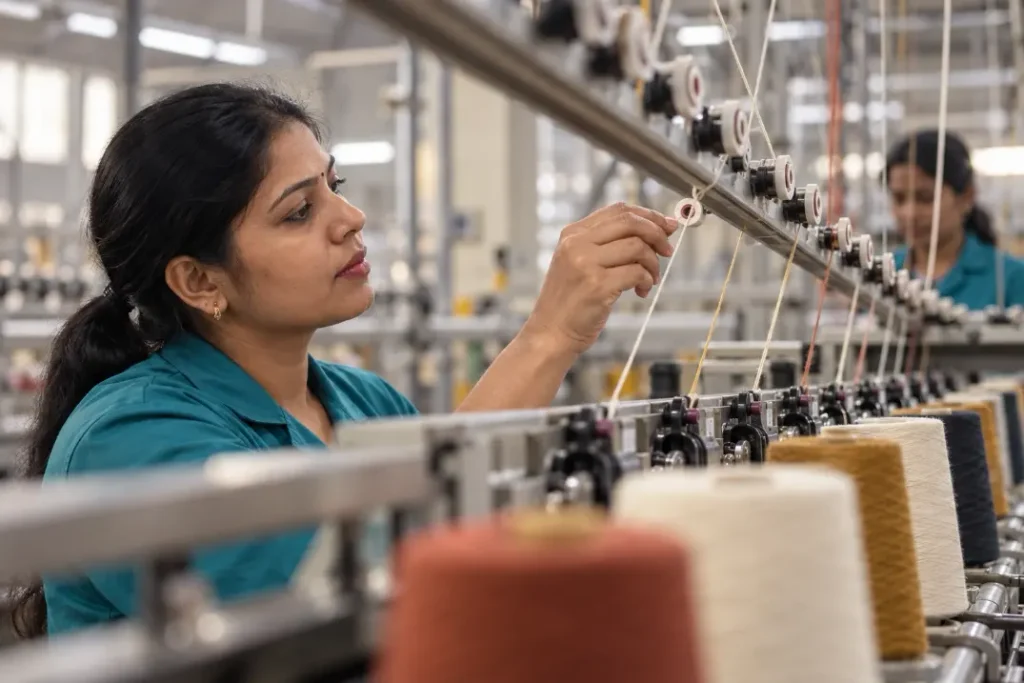
Ready-Made Stock vs Private-Label Production
Buying available stock is a different project from changing the fabric, adding your label, and developing new packaging. A small adjustment can involve another supplier or a fresh production run. Establish which purchasing model each quote covers.
China’s Yiwu market is one place to explore a broad small-commodity selection. Zhejiang’s official website describes its wholesale offering. When browsing China sourcing websites, check these details before treating a listing as a usable offer:
- Confirm which listed products are physically available, including the quantities in each version.
- Ask whether the minimum applies to each style, color, or packaging combination.
- Establish which labeling and packaging changes require a separate production order.
- Check whether a later order can use the same materials and product version.
Apply those questions to Indian suppliers too. For a first purchase, choosing an existing design with suitable packaging may be more practical than searching either country for a factory willing to develop everything from scratch.
Is It Cheaper to Buy Wholesale from China or India?
A lower wage bill doesn’t tell you what your order will cost. The fabric or components, setup work, and shipment all have to be paid for. We wouldn’t call either supplier cheaper until the offers cover the same work.
Make the Two Quotes Comparable First
Give both suppliers the same product brief, including dimensions, materials, quantities by version, and packing requirements. Put a date or version number on it. Otherwise, a revised specification can leave you comparing prices for two different products.
Ask each supplier to distinguish the following costs rather than presenting an unexplained total:
- Product and packaging charges, with the included materials and quantities clearly identified.
- Samples and setup work, stating which fees could recur on later orders.
- Inspection, testing, or agent services, with their scope and exclusions clearly stated.
- Freight, insurance, import charges, and final delivery, separating confirmed costs from estimates.
Record the currency, quote expiry, and payment terms too. Trade terms allocate delivery tasks, costs, and risks; they don’t all transfer risk at arrival. Specify the term and exact place, then compare costs to the same destination. ICC explains the purpose of Incoterms® rules.
For taxes and duties, get a current calculation for the actual product, origin, and destination. An unconfirmed charge stays unconfirmed. It shouldn’t disappear from your spreadsheet because one seller hasn’t mentioned it.
A Worked Example: The First Order and the Reorder
Suppose you need 1,000 cotton tote bags: 250 gsm fabric, 38 × 42 cm bodies, one printed design, and identical packaging, delivered to one warehouse. The figures below are entirely hypothetical, not supplier quotations or country price averages.
| Cost item, USD | China supplier A | India supplier B |
|---|---|---|
| Goods, excluding separately listed costs | $2,800 ($2.80 each) | $2,500 ($2.50 each) |
| Samples and setup | $120 | $420 |
| Agreed packaging | $200 | $200 |
| Agreed inspection | $220 | $220 |
| Transport and insurance to the same warehouse, excluding import charges | $780 | $820 |
| Known first-order subtotal | $4,120 | $4,160 |
| Known first-order cost per bag | $4.12 | $4.16 |
| Duties, taxes, clearance, required testing, and any agent fees | Not yet confirmed | Not yet confirmed |
| Repeat-order subtotal if setup is reusable and all other listed costs stay unchanged | $4,000 | $3,740 |
Supplier B’s goods cost $300 less, yet its known first-order subtotal is $40 higher. On a repeat order without new setup work, B becomes $260 cheaper. Neither subtotal is a final landed cost while the unconfirmed items remain unresolved.
One first order plus two identical reorders gives known subtotals of $12,120 for A and $11,640 for B. B’s $480 advantage is conditional: it assumes unchanged recurring charges and reusable setup. Confirm those assumptions before using forecast savings to justify a larger commitment.
We’d keep both suppliers in consideration at this stage. A has the smaller known first-order outlay; B has the lower recurring subtotal. Samples, missing charges, and the likelihood of genuine reorders should determine what happens next.
Why Businesses Choose China for Wholesale Sourcing
China’s “world factory” reputation reflects its manufacturing scale. A March 2026 report on the Chinese government website states that its manufacturing value added had ranked first globally for 16 consecutive years. We put more weight on what that supply base lets you do.
More Options When Your Product Range Grows
You might begin with one product, then add accessories, alternative versions, or a coordinated range. The concentrated markets discussed above give you places to investigate those additions. This is one reason we’d prioritize China when your business plan extends beyond a single item.
The ability to compare related options is part of why businesses source products from China. You may still need several manufacturers. We’d rather assess a specialist for each product than assume a supplier with a large catalog makes everything in it.
Supporting Suppliers for Product and Packaging Changes
Imagine changing a plastic accessory to fit inside a gift set. Its dimensions affect the insert, which affects the box. Someone needs to coordinate those changes before production. A cheaper accessory quote doesn’t solve a packaging mismatch.
When the relevant suppliers are nearby, discussing alternatives and exchanging samples can be easier. That’s part of what we value in China’s supply clusters. For a product still being developed, we’d want access to those options and someone responsible for coordinating the changes.
Established Relationships Can Make Staying in China Practical
If your existing Chinese supplier already has approved product specifications, packaging files, and a record of acceptable orders, those arrangements are worth considering. You can build the next purchase around something that has already worked.
We wouldn’t recommend replacing a capable supplier simply because a new overseas quote looks lower. First establish what the change would improve. Staying with a suitable Chinese supplier can be a sound commercial decision, particularly when that supplier can support your next product or variation.
Should You Switch Suppliers or Source from Both Countries?
Start by identifying the problem you want a new supplier to solve. An unsuitable production process calls for different action than an unclear specification. If nobody defined the required finish, moving the order to another country may reproduce the same disagreement.
Switching becomes worth investigating when the current supplier cannot resolve a documented problem or meet a new requirement. Include replacement samples, tooling or file adjustments, necessary tests, and remaining inventory in your decision. Ask what you can reuse and what must be rebuilt.
An Indian supplier might bring a capability or backup that your existing Chinese source cannot provide. We’d test that through a trial order while keeping the proven supplier available. Before splitting purchases, check whether smaller orders would weaken your terms with either supplier.
Also ask where critical materials and components come from. Suppliers in two countries could still depend on the same upstream producer. Maintaining both involves extra samples, records, and follow-up, so the additional source should solve a defined problem rather than merely add another country name.
How to Compare China and India Suppliers Before You Order
Give shortlisted suppliers the same requirements and time to respond. A quick reply makes communication easier, but you still need to know who will make the goods and who will take responsibility for the order. Use these checks before committing:
- Send the same dated product requirements and ask suppliers to identify any deviations.
- Verify the business, operating location, production role, and relationship to the payment recipient.
- Confirm which approved sample, materials, and packaging will guide the production order.
- Agree on trial-order acceptance conditions before comparing the results and deciding whether to continue.

When finding manufacturers and suppliers in China, distinguish the seller, factory, and any subcontractors. Ask equivalent questions in India using the relevant local business records. A trading company can be suitable; an unexplained production arrangement needs more investigation.
Keep a record of the approved sample and written changes, then compare the trial’s actual costs and results with the agreement. A good-looking sample doesn’t replace required product testing, and an unanswered question about the business cannot be offset by a discount.
Proceed only when the outstanding conditions are acceptable. For buying wholesale from China, carry the agreed specifications and responsibilities into the production and shipping plan. This helps keep the order consistent with what you evaluated during supplier selection.
How a China Sourcing Agent Can Help You Buy Wholesale
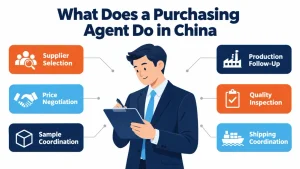
Choosing China still leaves work to do after you find a supplier. Someone must clarify a changed quote, follow up on samples, and coordinate suppliers when their products need to arrive or be packed together. That can stretch a small buying team.
At Hinsourcing, our business is China sourcing support. We discuss the product requirements and order plan with you, then agree which work belongs in the project and how fees apply. Depending on that scope, support can include:
- Finding suitable supplier candidates and comparing their offers against your product requirements.
- Coordinating quotations, samples, and the product or packaging changes you have approved.
- Following production and arranging checks within the agreed scope and reporting requirements.
- Coordinating consolidation and shipment handoffs with suppliers and the appointed logistics providers.
When finding a purchasing agent in China, compare responsibilities alongside fees. Ask who follows up when something changes and which charges are separate. If your team already handles this work well, you may not need another intermediary.
FAQs About Buying Wholesale from China vs India
Is China or India Better for First-Time Importers?
We’d start with China for an expandable product range or component-based goods, and include Indian specialists for suitable craft products. For your first order, prioritize clear requirements, manageable quantities, and a supplier you can verify over either country’s reputation.
Do I Need to Visit Suppliers Before Buying Wholesale?
Not every order requires a visit. Decide based on the product, order value, and unresolved risks. Remote checks and samples can inform that decision, but a video call doesn’t replace an onsite audit when production capability needs closer examination.
Can One Sourcing Agent Cover Both China and India?
Ask for evidence of how the agent works in each country, including subcontractors and responsibilities. Listing two countries on a website doesn’t establish that coverage. The Hinsourcing services described in this article concern China sourcing.
Choose Your Next Supplier, Not Just a Country
For buyers building a product range or developing customized products, we’d put China first on the shortlist. Look for suppliers whose capabilities support what you want to sell next, then confirm that their samples and complete costs justify the choice.
Have a product in mind? Discuss your sourcing requirements with Hinsourcing, including quantities, destination, and your required arrival date. We can discuss whether the project fits our China sourcing services and what support would be useful before you commit to an order.