A good sample and a convincing quotation can make an unfamiliar supplier feel like a safe choice. Before you send a deposit, though, you need to know who’s behind the offer and whether their promises match your order.
If you’re wondering how to avoid scams when sourcing from China, begin with the details of your own order. These five checks show what to verify before paying and when to pause, without treating every low price, delay, or misunderstanding as fraud.
How to Avoid Scams When Sourcing from China: 5 Checks Before You Pay
Use these checks before committing to a new supplier, then revisit anything that changes on later orders. You don’t need to prove someone is a scammer before pausing. An unresolved question about who gets your money is reason enough to investigate.
Check 1: Verify Who You’re Actually Dealing With

Ask a mainland Chinese company for its registered Chinese name and Unified Social Credit Code. Use these identifiers to check its public registration record, rather than searching only its English brand. China’s market regulator explains how to search the official system.
A genuine business license doesn’t prove the person messaging you represents that business. Compare the registered entity with the seller named on your order. If the relationship is unclear, contact the company through independently obtained details and ask it to confirm the person’s role.
Then ask where your goods will actually be made. A live video call or factory visit should follow the relevant production process, not stop at a showroom. Have the supplier explain which operations happen there and which are outsourced. Useful questions include:
- Which company will accept responsibility for the goods listed on my purchase order?
- Where will the main production stages happen, and who handles any outsourced work?
- Can the company independently confirm that this contact is authorized to handle my order?
A trading company or independent agent isn’t automatically suspicious. The problem is a role that keeps changing or cannot be explained. Keep the registration and contact checks with your order records; pause if the seller won’t identify the responsible party. Entities registered elsewhere need the appropriate local registry.
Check 2: Find Out What the Quote Really Includes
We wouldn’t reject a supplier just because its price is low. We’d first ask what makes that price possible. A different material, larger order quantity, or simpler packaging can explain the gap. Missing information cannot: an unconfirmed cost isn’t a zero cost.
Consider this hypothetical comparison for custom cotton tote bags. These are invented figures for illustration, not market prices or a Hinsourcing client quotation. Both suppliers appear to offer the same bag, but their written offers leave you buying different things.
| What you’re comparing | Quote A: $1.20 per bag | Quote B: $1.48 per bag |
|---|---|---|
| Quantity behind the price | 3,000 bags | 1,000 bags |
| Fabric specification | Described only as “cotton” | Cotton fabric weight specified as 280 g/m² |
| Printing | Not confirmed | One-color print on one side included |
| Packaging | Export cartons not specified | Export cartons included |
| Delivery scope | Factory pickup | Delivery to an agreed local warehouse |
Neither quote is automatically dishonest. Ask both suppliers to requote against your actual quantity and identical requirements before comparing totals. Also confirm any sample, tooling, testing, or other necessary charges. Save the revised offers rather than relying on explanations scattered across messages.
The stronger warning is a refusal to clarify, or a new compulsory charge appearing after payment without a verifiable basis. If someone demands a “release fee,” ask what it covers, who receives it, and where it was agreed. Don’t send more simply because you’ve already paid a deposit.
Check 3: Connect the Sample and Test Reports to Your Actual Order

A sample shows you the item in your hand. It doesn’t establish what will arrive in every carton. Record its material, dimensions, finish, and version, and link those details to the order. Keep an identifiable reference sample and agree how any production changes require your approval.
For example, imagine approving a thick cotton bag, then receiving a test report for a lighter fabric. Even a genuine report may not answer your question about the approved bag. Ask the issuer or a qualified specialist whether its product description and testing scope cover your actual requirements.
Request the complete report, not a cropped image. Check the product, model, material, named parties, and date before verifying it through the issuer’s official channel. SGS explains that a report number alone is insufficient; its report verification process requires the full document.
Arrange checks of the actual production batch against your approved requirements. If materials change or documents don’t match, resolve that before the next agreed payment. Document authenticity, product suitability, and batch quality need separate answers; ordinary inspection also cannot replace any required laboratory testing or compliance assessment.
Check 4: Confirm the Payment Details Independently

Check the beneficiary, meaning the named payment recipient, and its connection to your seller and order. A different name may involve an export company, affiliate, or platform payment arrangement. Get that relationship in writing and verify it independently. A confident explanation alone isn’t enough.
Treat changed bank details as a fresh verification task, even with a familiar supplier. The FBI’s business email compromise guidance recommends independently confirming payment requests and account changes. Use a previously verified number, not a new number supplied in the account-change message.
For an important transfer, have another person review the payment instructions. Working alone? Verify the details, record the confirmation, then enter the payment. Keep those tasks separate, even when someone offers a last-minute discount or says the shipment will miss its deadline.
Save the confirmed instructions and the account-change verification record. A successful small test transfer only shows that money reached an account; it doesn’t prove who controls it or whether the order will be fulfilled. Stop if the payment recipient remains unexplained or independent confirmation isn’t possible.
Check 5: Agree on What Must Happen Before Each Payment
An invoice that says “bags, 1,000 pieces” leaves too much room for disagreement. Your order and attachments should identify the seller, approved product version, quantity, delivery arrangements, inspection requirements, and agreed handling of defects. Include who can approve changes and how those approvals will be recorded.
Negotiate payment conditions before placing the order. If a balance depends on inspection or corrections, agree what evidence is required and who approves it. A message saying “production finished” doesn’t establish that the agreed checks passed. Keep the following records together:
- The accepted order and specifications, including the approved sample reference and delivery arrangements.
- Written payment milestones, inspection responsibilities, and the agreed process for handling nonconforming goods.
- Relevant inspection findings, completed corrections, and the buyer’s approval when the agreed payment milestone is reached.
Pause to resolve missing evidence before authorizing the next payment under those terms. Don’t assume you can impose new conditions after signing. For a substantial or complex order, ask qualified counsel to review the agreement and applicable remedies; no standard deposit percentage makes every transaction safe.
These decisions belong inside the wider process of buying wholesale from China, from sample approval through production and shipment. Keep each revision in the order file so the factory, inspector, and buyer are working from the same requirements when a payment becomes due.
Does Alibaba Trade Assurance Protect You from Supplier Scams?
Trade Assurance can provide protection for eligible orders, but it doesn’t replace supplier verification or promise an automatic refund. Check your particular order’s coverage, written requirements, payment instructions, and dispute rules. A supplier saying “you’re protected” isn’t enough to establish what the platform will cover.
Alibaba’s official on-platform trading guidance includes wire transfers to its designated bank account. Bank transfer doesn’t automatically mean an off-platform transaction. What matters is whether the payment follows the official instructions for your order, rather than details sent privately by a seller.
Log in to your account yourself and review the order before paying. Keep specifications and agreed changes in the platform’s order and message records. If a discount requires a different payment route, check with official support whether that route preserves the protection you’re relying on.
If something goes wrong, use the order’s dispute process promptly and preserve the relevant evidence. Eligibility, submission deadlines, and available remedies depend on the applicable terms. Don’t rely on a generic refund promise or a deadline copied from an unrelated order.
What Should You Do If You Suspect a Supplier Scam?
Stop sending additional money while you investigate. If you believe a transfer went to a fraudulent account, contact your bank or payment provider immediately and ask what action is possible. The FBI advises contacting your financial institution promptly when business email compromise occurs.
- Save original messages, invoices, order versions, payment receipts, and any notices changing the recipient account.
- Build a dated timeline showing what was promised, what changed, and which payments were made.
- Open the relevant platform dispute promptly, using official channels rather than links sent by the suspected party.
- Report suspected fraud to the appropriate authorities; seek qualified legal advice for significant losses or disputed obligations.
For U.S.-related internet fraud, the FBI’s IC3 is one reporting route; buyers elsewhere should also consult their local authorities. Acting quickly may preserve options, but it doesn’t guarantee recovery. Keep factual descriptions of what happened rather than declaring every delivery or quality dispute a proven scam.
Why Hire a Sourcing Agent to Help Avoid Scams in China?
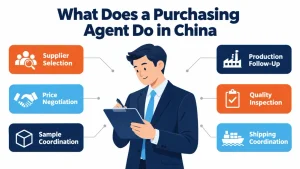
A sourcing agent is useful when you don’t have the time or local support to carry out these checks yourself. When choosing a purchasing agent in China, ask which checks they’ll perform, what records you’ll receive, and how they’ll report unresolved concerns.

Within the agreed scope, Hinsourcing coordinates supplier checks, factory visits, quotation comparisons, and sample reviews. This helps buyers examine who they’re dealing with and what they’re buying before committing, rather than making a decision from a supplier’s presentation alone.
That support can continue through production follow-up, inspection arrangements, packaging, and shipment coordination. Checking the goods against the approved order helps bring discrepancies to your attention. Hinsourcing can coordinate the follow-up, leaving you more time for your own customers.
No agent can remove every risk; important payments and changes still need your approval. Tell Hinsourcing what you’re sourcing and where you need help. Get the unanswered questions resolved before the next payment leaves your account.
FAQs About Avoiding China Sourcing Scams
Is a Business License Enough to Trust a Chinese Supplier?
No. A registration record helps establish the company’s identity, but it doesn’t prove that your contact represents it or that it can fulfill your order. Check the relationship between the business, production arrangements, order documents, and payment recipient.
Is Buying Directly from a Factory Safer Than Using a Trading Company?
Not automatically. A factory label doesn’t establish honesty, and a trading company can openly manage a legitimate order. Focus on who accepts responsibility, where production happens, and whether the product and payment arrangements can be verified.
Can a Small Trial Order Prove a Supplier Is Reliable?
A trial order provides evidence about that particular transaction. It doesn’t prove the supplier can handle a larger quantity or changed specifications. Recheck material, production, and payment changes before assuming the next order carries the same risk.
Do You Need to Visit the Factory Before Ordering?
Not for every order. Consider the product risk, order value, production complexity, and unresolved questions. You can commission a suitably scoped third-party visit, but even an onsite check doesn’t replace clear specifications, payment verification, or follow-up on the actual goods.