Are products made in China good quality? Yes, they can be. China manufactures products for different budgets, uses, and markets. What determines the result is not the country-of-origin label alone, but the design, materials, factory capability, production controls, and requirements agreed with the buyer.
For brands and importers, a more useful question is: Can this supplier consistently produce the quality my customers expect? The answer comes from examining the product, approving the right sample, checking relevant documents, and agreeing on how the bulk order will be inspected.
Why Does “Made in China” Have a Mixed Quality Reputation?
Two products made in China may look similar while differing substantially in materials, construction, performance, and price. Manufacturers serve different customer segments, and buyers often choose the specifications and cost targets their products must meet. A simple promotional item and a product designed for years of frequent use should not be judged against the same performance requirements.
Quality problems can arise from unclear specifications, unsuitable materials, limited process control, or production changes that were not approved. They can also arise when buyers compare a low-cost quotation with a higher-specification product without recognizing the difference.
A country’s reputation cannot substitute for checking an individual product. Judge the supplier against your written requirements and the evidence for the actual order, rather than assuming every Chinese factory produces the same quality.
Why Can Chinese Manufacturers Produce High-Quality Products?
China’s manufacturing base gives buyers access to a wide range of materials, components, production processes, and specialized suppliers. That range can support both straightforward wholesale products and complex, highly customized designs. It does not mean every factory offers the same capability or level of quality control.
Specialized Manufacturing and Supplier Networks
Different Chinese manufacturing regions have developed concentrations of factories and supporting businesses in areas such as textiles, consumer electronics, plastics, packaging, and metal components. For a suitable product, access to nearby material suppliers, tooling partners, and finishing services may make prototyping and production coordination easier.
The practical benefit depends on whether the specific factory can source the materials you approved, manage any subcontractors, and repeat the required process reliably. Ask which operations it performs in-house and who is accountable for outsourced work.
Engineering, Customization, and Quality Systems
Some Chinese manufacturers support product development, mold making, sampling, testing coordination, and standardized inspections alongside bulk production. Those capabilities can help brands specify and reproduce a higher-quality product, but they must be verified for the supplier and production site involved.
A large factory, advanced equipment, or a recognizable customer list is not proof that your order will pass. Ask for evidence relating to your product category: similar completed items, available machinery, sample revisions, documented checkpoints, and relevant test results.
If you’re also comparing sourcing locations, our guide to why businesses source products from China discusses the broader supply-chain considerations. Here, the focus is on proving product quality rather than relying on country-level claims.
What Does “Good Quality” Mean for Your Product?
The American Society for Quality’s glossary connects quality with meeting stated or implied needs and being free from deficiencies. For a buyer, that means converting a vague request for “good quality” into requirements that can be assessed.
| Quality area | What the buyer should specify | Useful evidence |
|---|---|---|
| Appearance and workmanship | Color, finish, seams, visible defects | Approved sample, photos, inspection findings |
| Materials and dimensions | Composition, components, size, tolerances where appropriate | Specification sheet, measurements, material reports |
| Function and durability | Intended use, critical functions, expected performance | Functional checks and suitable performance tests |
| Packaging and arrival condition | Protection, labeling, carton contents | Packing specification, packing checks, receiving records |
| Safety and market compliance | Intended users, destination, applicable requirements | Product-specific tests and compliance documentation |
Good Workmanship Is Only One Part of Quality
A shirt can have neat seams and still shrink or lose its shape after washing. An electronic product can look well finished while failing a required function. Visual inspection helps assess workmanship; performance claims need checks appropriate to the product and intended use.
Link each important requirement to a method of verification. A photograph, short demonstration, physical sample, and laboratory report answer different questions.
Packaging and Product Safety Matter Too
Product quality includes what reaches the customer, not just what leaves the production line. Agree on protective packaging for the planned transport and sales channel, then record the condition of the goods at dispatch and arrival when relevant.
Likewise, products made in China are not automatically safe or unsafe. Safety depends on the product, its intended users, and the laws of the market where it will be sold. Obtain product-specific evidence and qualified advice for applicable requirements rather than accepting a generic factory certificate as sufficient.
What Actually Determines Product Quality in China?
Three factors deserve attention before a purchase: the product’s materials and design, the supplier’s ability to manufacture it, and the clarity of the requirements being passed into production.
Materials, Components, and Product Design
A listing photo rarely establishes material composition, weight, thickness, internal components, or durability. Even a higher-grade material may perform poorly if a critical joint, seam, or assembly method is unsuitable.
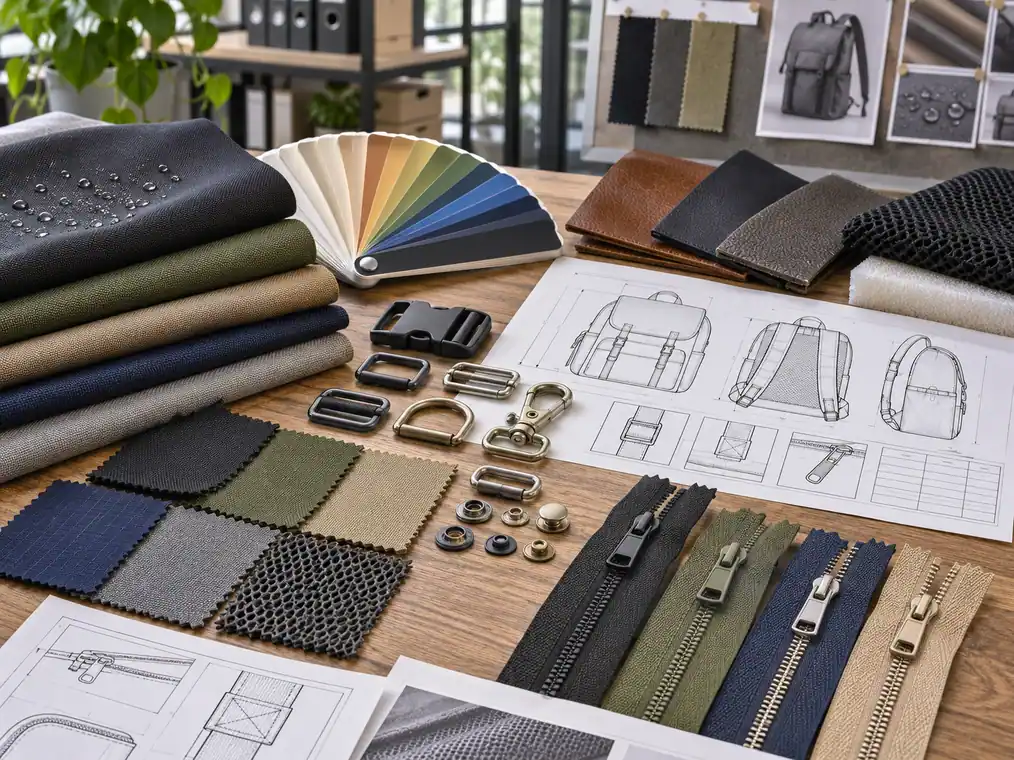
Consider an illustrative fabric order placed after reviewing only a listing’s price and photographs. The delivered material could feel rougher or look different in color from the images. That risk is especially relevant when texture and shade affect the finished product.
For a fabric purchase, ask suppliers for comparable swatches. A local representative can examine the material where practical. Document color, texture, and any differences against the approved brief for the buyer to review before placing an order.
The useful evidence is the ability to compare the actual material with a written requirement. Check real color and texture against the required material before committing to production. For any product where feel, fit, finish, or performance affects sales, that distinction matters.
Manufacturing Capability and Clear Specifications
Find out which processes the supplier handles itself, what it subcontracts, and how it checks incoming materials and finished goods. A supplier verification or factory audit can help review the business and relevant production arrangements when its scope is agreed in advance.
For each product, keep a written specification covering the characteristics that matter. Depending on the item, this may include materials, dimensions, color references, functions, components, artwork, packaging, and acceptance criteria. Ask the supplier to flag unclear requirements before quoting or producing.
A clear brief does not automatically produce a good result. It gives both sides a consistent reference for sample approval, production checks, and resolving discrepancies.
Are Products Made in China Good Quality at Lower Prices?
Yes. A lower price may come from a simpler design, standard components, higher volume, or different packaging and commercial terms. It can also reflect materials or production arrangements that are unsuitable for your intended use. Price alone does not establish quality.
When comparing Chinese manufacturers’ quotations, confirm that you are comparing the same materials, specifications, quantity, customization, checks, packaging, and delivery terms. Ask suppliers to explain any meaningful price difference rather than assuming the cheapest or most expensive offer is best.
If a quote needs to come down, discuss changes that do not compromise critical functions, safety, or market requirements. Consider the total landed cost and the potential expense of rework, replacement, returns, and customer complaints—not only the unit price.
How Do Chinese Manufacturers Control Product Quality?
Quality control in China should be discussed as a defined process for your order, not a general claim that a factory “checks everything.” The checks below describe practical stages buyers can ask a manufacturer or inspection partner to arrange; their scope depends on the product, factory, and agreement.
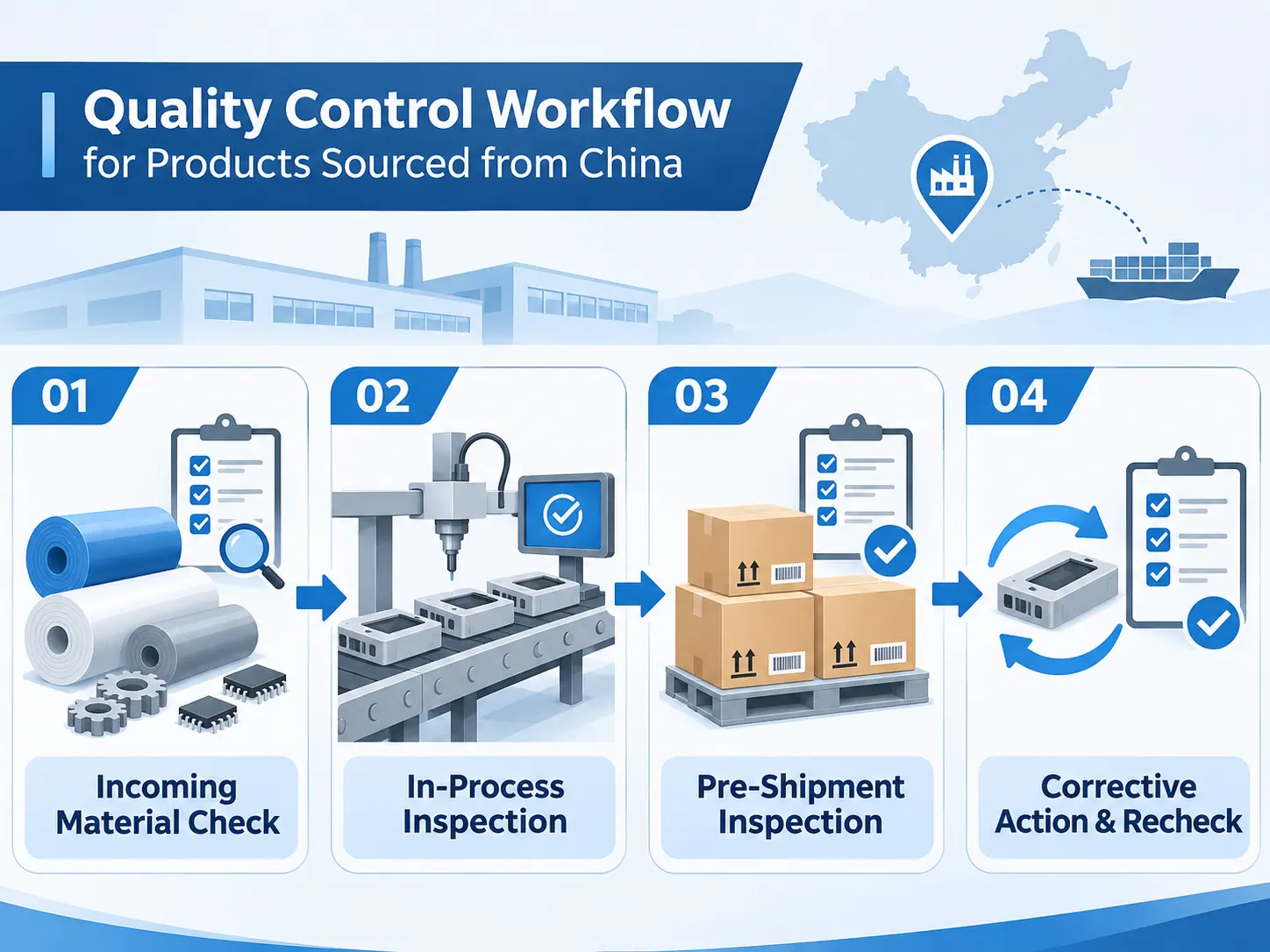
1. Incoming Material Inspection
Before production, confirm that the planned fabrics, plastics, electronic components, finishes, or other critical inputs match the approved requirements. For high-impact characteristics, decide whether supplier documents, measurements, or additional testing are needed.
Record the material version and how substitutions will be approved. If a component changes, check whether the approved sample and supporting reports are still relevant.
2. In-Process Quality Control
Identify the manufacturing steps where an error would be difficult or expensive to correct later. Depending on the product, checks may focus on assembly, stitching, dimensions, appearance, functionality, or process settings.
Agree on who records deviations, how affected work is separated, and who can authorize corrections. A quality-control checklist is useful only when its findings lead to decisions.
3. Pre-Shipment Inspection
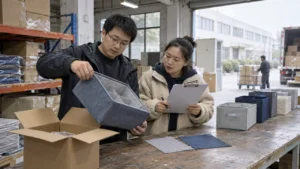
Before the goods leave the factory or China warehouse, verify the production batch against the approved specification. The inspection scope may include quantities, workmanship, critical dimensions, selected functions, accessories, labels, and packaging.
Clarify whether the check covers selected units or every unit, and whether any laboratory testing must be arranged separately. Photos of sealed cartons alone do not establish product conformity.

4. Corrective Action and Release
If inspection finds discrepancies, document the affected items, proposed correction, responsible party, and required recheck. Agree on who can approve shipment and which unresolved findings should hold the goods.
Hinsourcing’s production follow-up and quality control service can help buyers coordinate agreed checkpoints and review reported issues before dispatch. The actual work and inspection limits should be confirmed for each project.
Why Do Bulk Orders Sometimes Differ from Approved Samples?
A sample proves what the reviewed item looks or performs like at one point in time. Bulk consistency requires the same approved materials, design, manufacturing conditions, and relevant checks to be carried through the production run.
Approve the Correct Sample Version
Ask whether the sample is a showroom item, an early development prototype, or a production-intent sample. Record the version, outstanding changes, and the final specification. Keep the reference clear enough that the buyer, factory, and inspector can all identify it.
Control Changes and Repeat Orders
Agree in writing on which substitutions need approval—such as fabric composition, components, tooling, finishes, or production site. When a supplier says an alternative is “equivalent,” ask which characteristics are equivalent and what evidence supports that conclusion.
For repeat orders, confirm the approved version again rather than relying solely on “same as last time.” Compare batches using the same important criteria, and investigate material or process changes if results begin to drift. This is often discussed as quality fade, although a specific cause should be established from evidence rather than assumed.
What Evidence Proves a Chinese Product Meets Your Requirements?
No single document establishes every aspect of quality. Use each kind of evidence for the question it can actually answer.
| Evidence | What it can support | What it cannot establish on its own |
|---|---|---|
| Approved sample and specification | The intended product reference | Consistency across the whole batch |
| Factory audit | Operations and practices within the assessed scope | Conformity of every finished product |
| ISO 9001 certificate | A quality-management system within its stated scope | Product-specific quality or safety |
| Product test report | Results for the tested sample and methods | Untested or subsequently changed versions |
| Inspection report | Findings for identified goods and checks | Untested properties or every unit’s long-term performance |
How to Read Factory Audits and ISO 9001 Certificates
Look beyond the certificate or audit cover page. Compare the registered company, production site, date, validity, scope, issuing body, and any corrective actions with the supplier and order in question.
ISO’s guidance on choosing suppliers distinguishes quality-management-system conformity from proof that a product meets specific requirements. ISO publishes standards; it does not itself certify individual companies.
How to Check Product Tests and CE Marking
A useful test report should match the product model, materials, photographs or configuration, methods, and relevant date. Reports for a similar-looking model may not cover your current design or material changes.
For products sold in the EU, the official CE marking guidance explains that CE marking applies only where specific EU product rules require it. It is not a universal “quality certificate.” Confirm which rules and conformity assessment steps apply to the product, using qualified support where necessary.
For inspection reports, review the batch identity, sampling basis, checklist, findings, and unverified items. A “pass” result is meaningful only in relation to the agreed checks.
How to Ensure Product Quality When Sourcing from China
Before placing or scaling up an order, use this practical sequence:
- Define the product and market. Specify intended use, target customer, destination, and critical requirements.
- Verify the supplier. Confirm the business, actual production arrangements, and capability to manufacture the item.
- Compare equivalent quotations. Keep product specifications and delivery terms consistent; request explanations for differences.
- Approve a physical reference. Review samples, record changes, and confirm which version represents the intended production result.
- Arrange testing and QC checkpoints. Identify who checks incoming materials, production steps, finished goods, and relevant compliance evidence.
- Review the result before shipment. Compare findings with the approved criteria, resolve discrepancies, and authorize release only when the agreed conditions are met.
When a buyer is still building a shortlist, our guide to finding manufacturers and suppliers in China covers the earlier search and screening stage. Once a supplier has been selected, the priority shifts to controlling the product and the order.
What Should You Do When Products from China Fail Quality Checks?
Act on documented discrepancies instead of relying on a general complaint that the goods are “bad quality.” First identify the affected SKUs, quantities, cartons or batches, and record clear photos, measurements, and inspection findings.
Then compare those findings with the approved sample, written specifications, and any authorized revisions. Ask the supplier for an explanation and a written corrective-action proposal. Agree whether the solution involves rework, replacement, further inspection, or another remedy—and who pays the related costs.
Verify the corrected goods before closing the issue or authorizing dispatch. Keep a record of the resolution and consider whether other batches may be affected. If a safety or compliance concern arises, hold potentially affected goods and obtain appropriate assessment before sale or distribution.
FAQs About Products Made in China
Are Products Made in China as Good as Products Made Elsewhere?
They can be. A fair comparison looks at products made for the same use, with equivalent materials, specifications, and supporting evidence. Country of manufacture alone does not determine quality.
Why Are Some Products Made in China So Cheap?
Price can reflect production scale, standard designs, components, materials, packaging, and supply terms. A cheap product may suit its intended purpose—or miss the standard your brand needs. Compare equivalent quotations and verify critical characteristics.
Does a Higher Price Guarantee Better Quality?
No. Ask what the higher quote includes and whether it provides measurable benefits for your customers. More expensive does not automatically mean better specified or better controlled.
Does the Same Chinese Factory Produce the Same Quality for Every Brand?
Not necessarily. A factory may manufacture products to different designs, materials, testing plans, and quality standards. Assess the exact product and order rather than assuming another customer’s specifications apply to yours.
Are Products Made in China Good Quality for Small Business Orders?
Yes, when the supplier’s order conditions, materials, development work, and checks fit the project. Small volumes still require clear specifications and relevant safety or market compliance work.
Can an Inspection Guarantee That Every Product Is Defect-Free?
No. Inspection provides findings for the goods and characteristics examined. Sampling leaves units unexamined, and even 100% inspection does not automatically test every performance or safety property.
Is Buying Directly from a Chinese Factory Always Better Than Using a Trading Company?
No. Direct factory access may simplify technical communication, while a trading company may coordinate multiple suppliers or categories. In either case, verify the actual manufacturing site, order responsibilities, specifications, and quality checks.
Discuss Product Quality and China Sourcing with Hinsourcing
Are products made in China good quality? They can be, but a purchasing decision needs evidence for your specific product. If you are comparing Chinese manufacturers or preparing a bulk order, send us your product photos or drawings, required materials and functions, target market, quantity, proposed packaging, and any supplier quotations or samples you already have.
At Hinsourcing, we can discuss the supplier verification, sample coordination, production follow-up, and quality-control support appropriate to the project. Contact Hinsourcing to identify which questions and checks should be resolved before you commit to production.